Quick Guide to Crown Cement
- Why Super Glue, Nail Polish, or Household Adhesives Are a Disaster
- The Professional Arsenal: What Dentists Actually Use (It's Not "Glue")
- The Pharmacy Aisle: Temporary Dental Cement Kits
- How Your Dentist Decides: It's More Than Picking a Tube
- Your Burning Questions Answered (FAQ)
- The Final Verdict: A Step-by-Step Action Plan
Let's get straight to the point. If you're sitting there with a loose or detached crown in your hand, wondering what glue to use for a tooth crown, the most critical piece of advice is this: call your dentist. Seriously, pick up the phone right now. The stuff you're thinking of using from your toolbox or craft drawer? It's not just a bad idea; it can be dangerous, damaging your tooth, the crown itself, and even making you sick.
I know, I know. You want a quick fix. It's after hours, or maybe you're trying to avoid another dental bill. I've been there myself. Years ago, I had a temporary crown pop off right before a big meeting. My first thought wasn't "call the dentist"—it was "what glue can I use for this tooth crown at home?" I rummaged through a drawer and found some super glue. I stared at it for a good five minutes. Everything in my gut told me it was a terrible idea. I'm so glad I listened to that feeling.
This article isn't here to shame you for considering a DIY fix. It's here to explain why the question of "what glue to use for a tooth crown" has a layered answer. We'll dive deep into the professional materials dentists actually use (they're called dental cements, not glue), the temporary stuff you might find at the pharmacy, and the absolute no-go products you must avoid. My goal is to arm you with so much information that reaching for that household adhesive becomes unthinkable.
Why Super Glue, Nail Polish, or Household Adhesives Are a Disaster
It seems logical, right? Glue sticks things together. Crown needs sticking. Problem solved. But teeth exist in a war zone. Think about it: extreme temperature changes from ice cream to coffee, constant moisture from saliva, crushing forces from chewing, and a bacterial ecosystem that would make a biologist blush.
Household adhesives fail on every single front. They aren't biocompatible. That's a fancy way of saying they can poison you. Cyanoacrylate (super glue) can release formaldehyde as it breaks down. Do you want that leaching into your gums and bloodstream? I didn't think so.
They also create a terrible seal. A proper dental cement seals the margin where the crown meets your tooth. This prevents bacteria from sneaking in and causing decay under the crown—a surefire path to a root canal or losing the tooth entirely. Super glue is brittle. It cracks under pressure and doesn't flex. One good bite on an apple, and you've not only re-loosened the crown, but you've also now got a bunch of toxic, jagged glue fragments in your mouth and potentially on the prepared tooth surface, which complicates the dentist's proper repair.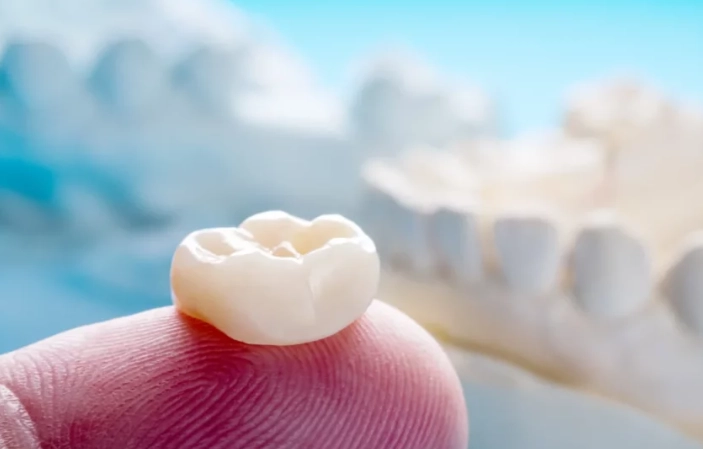
Finally, and this is a big one, using the wrong glue makes your dentist's job a nightmare. They have to spend extra time—which you pay for—scraping, drilling, and cleaning all that garbage off your natural tooth and the inside of the crown. You risk permanently ruining a perfectly good, expensive crown. I've heard dentists groan about this more times than I can count. It turns a simple 15-minute recementation into a costly, complex procedure.
Bottom Line: If you take nothing else from this article, remember this. Using household glue for a dental crown is a shortcut that leads to a much longer, more painful, and more expensive road. The answer to "what glue to use for a tooth crown" is never, ever a product from the hardware aisle.
The Professional Arsenal: What Dentists Actually Use (It's Not "Glue")
Dentists use dental cements or adhesives. The choice is a science, not a guess. It depends on the type of crown (all-porcelain, porcelain-fused-to-metal, gold, zirconia), the condition of the underlying tooth, its location in your mouth, and how much moisture control is possible.
So, what are these magical glues? Let's break down the main categories. This is the inside info you came for.
Permanent Dental Cements: The Long-Term Champions
These are designed to last for years, even decades. They create a strong, durable seal that can withstand oral forces.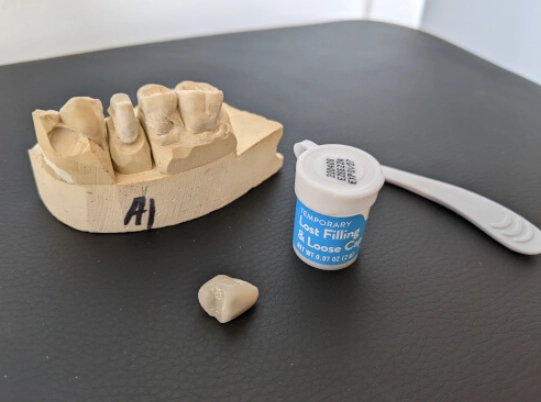
| Type of Cement | Common Brand Names (Examples) | Best For | Key Characteristics |
|---|---|---|---|
| Resin-Based Cements | RelyX Unicem, Panavia, Multilink | All-ceramic crowns (e.g., porcelain, zirconia), veneers, inlays/onlays. | Very high strength, excellent esthetics (tooth-colored), superb seal. Often require multiple steps (etching, bonding). The modern gold standard for esthetic work. |
| Glass Ionomer Cements | Fuji, Ketac | Metal-based crowns, pediatric crowns, situations with less-than-perfect dryness. | Good biocompatibility, releases fluoride (which helps prevent decay), bonds chemically to tooth structure. Slightly less strong than resin but more forgiving. |
| Resin-Modified Glass Ionomer (RMGI) | Fuji PLUS, RelyX Luting | A great all-rounder for metal, PFM, and some ceramic crowns. | Combines the fluoride release of GIC with higher strength and easier handling of resin. Very popular for general cementation. |
| Zinc Phosphate | Fleck's, Modern Tenacin | The old-school workhorse. Still used for long-span bridges, high-stress areas. | Extremely high compressive strength, long clinical history. Can be irritating to the pulp if placed on a very sensitive tooth. Not adhesive—it works like a mechanical luting agent. |
See what I mean? It's not one-size-fits-all. Your dentist isn't just grabbing a random tube. They're making a clinical decision. For a front tooth porcelain crown, a resin cement is almost always the answer to "what glue to use for a tooth crown" in that scenario because strength and invisibility are key. For a molar gold crown, an RMGI or even zinc phosphate might be the chosen champion for its proven durability under crushing forces.
Temporary Cements: The Short-Term Holders
These are designed to hold a crown securely for a few weeks but allow for relatively easy removal. They're used when a crown is provisional (a temporary), or when the dentist needs to check the tooth's health before making the bond permanent.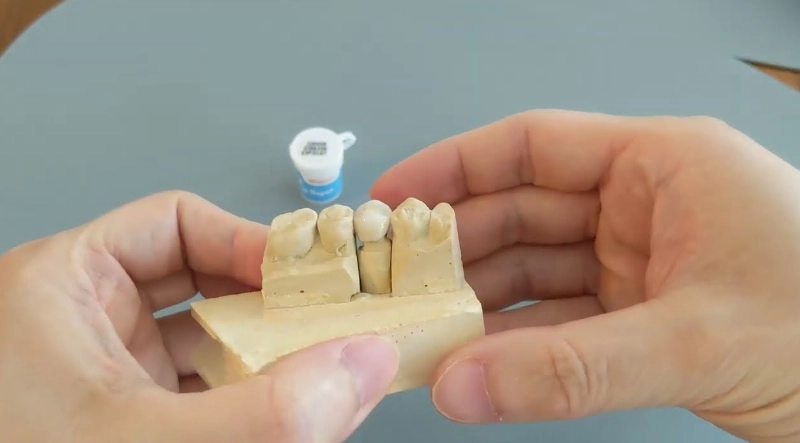
Temporary cements are weaker. That's by design. They often contain eugenol (from clove oil), which has a soothing, sedative effect on a potentially irritated tooth nerve. Brands like Temp-Bond are staples in every dental office. The strength is enough to let you eat, but not so much that the dentist can't pop the crown off when needed.
This brings us to the over-the-counter stuff.
The Pharmacy Aisle: Temporary Dental Cement Kits
This is the gray area. In your search for what glue to use for a tooth crown, you will find products like Dentemp, Recapit, or Temparin at your local pharmacy or online.
What are they? These are over-the-counter (OTC) temporary dental cement kits. They are formulated to be non-toxic and safe for short-term intraoral use, which already makes them infinitely better than super glue.
Here's my honest take on these kits. They are a temporary bridge (pun intended) to get you to the dentist. They are not a permanent solution, and they are not as good as what your dentist has.
The Pros: They are biocompatible and safe. They can provide enough hold for a few days to eat soft foods and smile with confidence while you wait for your appointment. They can relieve the anxiety of having a loose crown.
The Cons: The bond is weak and unreliable. The seal against bacteria is poor. The mixing and placement can be messy and tricky without dental training. If the underlying tooth is sensitive or decayed, you might not get any relief. Honestly, some of the kits have instructions that are confusing.
I tried one once for a loose temporary crown over a weekend. It held for about 24 hours before coming loose while I was eating a sandwich. It bought me some time, but it was fiddly, and the taste was… medicinal. It reinforced that a professional job is in a different league.
So, can you use them?
If you absolutely cannot see a dentist for 24-48 hours (you're traveling in the middle of nowhere), and you need to secure a crown to avoid swallowing it or losing it, an OTC temporary kit is the only remotely acceptable DIY option. But you must follow the instructions meticulously, clean the crown and tooth as best you can, and understand it's a stopgap. Your very next action should be scheduling a dental visit.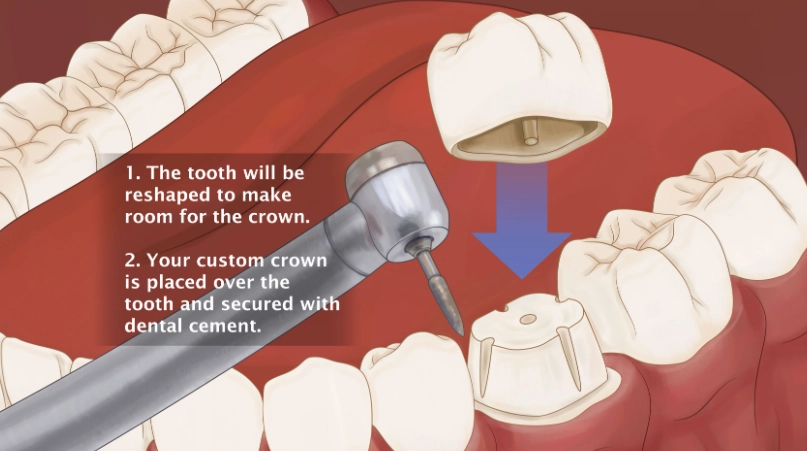
How Your Dentist Decides: It's More Than Picking a Tube
Ever wonder what happens behind the scenes? When you go in with a loose crown, the dentist isn't just slapping on some cement. It's a process.
- Inspection & Cleaning: They examine both your natural tooth (the abutment) and the inside of the crown. They check for decay, cracks, or old cement. Everything is meticulously cleaned and sterilized. Any decay is removed. This step is impossible to do properly at home.
- Isolation: This is huge. The tooth must be kept perfectly dry and free of saliva. Dentists use cotton rolls, suction, and often a rubber dam—a sheet of latex that isolates the tooth. Moisture is the enemy of a strong bond. At home, you're fighting a losing battle with saliva.
- Selection: Based on the factors we discussed (crown material, tooth health, location), they choose the appropriate permanent cement. They have a whole armory we talked about.
- Application & Seating: The cement is mixed (if needed) and applied to the inside of the crown. The crown is placed on the tooth with precise pressure. Excess cement is squeezed out.
- Clean-up & Curing: All the excess cement around the edges is carefully removed. If it's a light-cured resin cement, a special blue light is used to harden it instantly. For others, they harden on their own chemically.
- Check & Polish: They check your bite to make sure the crown isn't too high, then polish the edges to a smooth finish.
This protocol, this controlled environment, is why a professional recementation lasts. It's the real answer to what glue to use for a tooth crown: the right material applied with the right technique in the right conditions.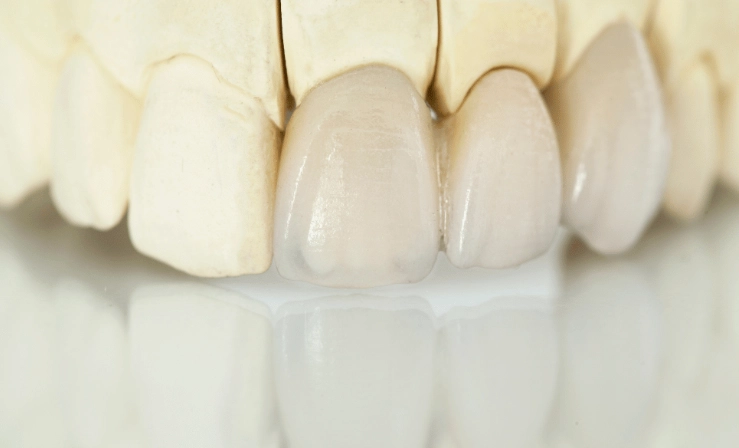
Your Burning Questions Answered (FAQ)
Q: My crown fell off and I lost it. What now?
A: This is a dental emergency. Call your dentist immediately. The exposed tooth is vulnerable to decay, damage, and shifting. They will need to make a new crown, which requires a new impression. Protect the tooth by avoiding chewing on that side.
Q: Can I use denture adhesive for a loose crown?
A: Slightly better than super glue, but still a bad idea. Denture adhesives (creams, powders) are designed for a different purpose—creating a seal between a large denture base and gums. They are not strong enough for a single crown, wash out easily, and don't provide a proper seal against decay.
Q: How long can I wait if my crown is loose but still on?
A: Don't wait. A loose crown allows bacteria and food in. Every day you wait increases the risk of decay under the crown, which can destroy the tooth. Call your dentist as soon as you notice it's loose.
Q: How much does it cost to recement a crown?
A: It varies, but it's a fraction of the cost of a new crown. If it's a simple recementation of an existing, undamaged crown on a healthy tooth, it's often a minor procedure fee. If decay is found or the crown is damaged, the cost goes up. Still cheaper than the consequences of a DIY fix gone wrong.
Q: Is there a permanent glue I can buy myself?
A: No. Professional dental cements are classified as medical devices and are only sold to licensed dental professionals. Their handling, mixing ratios, and curing mechanisms require training. The kits available to consumers are, by regulation, temporary.
The Final Verdict: A Step-by-Step Action Plan
So, you have the crown in your hand or it's wobbly in your mouth. Here's exactly what to do, in order.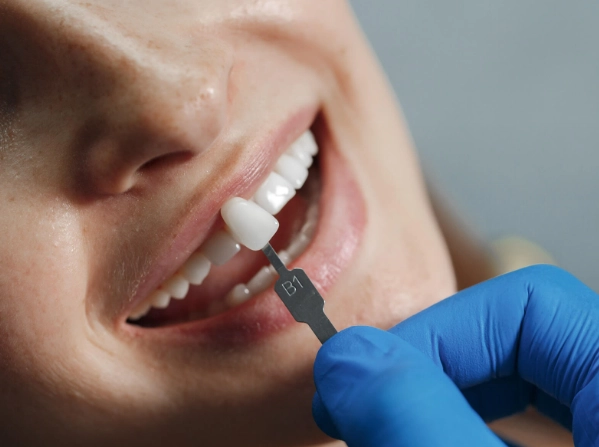
- Retrieve & Rinse: If it's out, gently rinse the crown with warm water. Do NOT scrub or use chemicals. Rinse your mouth with warm salt water.
- Call Your Dentist: This is step two, not step ten. Explain the situation and get the earliest possible appointment.
- Protect (If You Must Wait): If you can't see the dentist for a day or two, and the crown is out, you can try a pharmacy temporary kit. Follow the instructions to the letter. Keep the area clean. Eat only soft foods on the opposite side. If the crown is just loose, avoid chewing on it entirely.
- Go to Your Appointment: Bring the crown with you. Let the professional handle it with the correct materials and techniques.
Understanding what glue to use for a tooth crown reveals a bigger truth about dentistry. It's not about brute-force sticking power. It's about biocompatibility, precision, and long-term health. The best "glue" is the one chosen by your dentist, applied in a sterile, dry field, to protect your natural tooth for years to come.
That temporary fix mindset? Let it go. Investing in the professional solution saves you money, pain, and your tooth in the long run. Trust me on this one.
Your smile is worth it.