Your Quick Guide to Relief
- Decoding the Three 3's: A Step-by-Step Walkthrough
- When the 3-3-3 Rule Might Help (And When It Absolutely Won't)
- Beyond the Rule: Other Safe, At-Home Measures (And What to Avoid)
- Your Action Plan: From First Twinge to Dentist's Chair
- Common Questions About the 3-3-3 Rule for Toothaches
- The Real Truth About Toothache First Aid
Let's be real, toothaches are the worst. They hit you at the worst possible time—late at night, on a weekend, when you're traveling—and suddenly, it's the only thing you can think about. The throbbing, the sharp pain, the sheer misery of it. In those desperate moments, you might start Googling frantically for anything that can help. And that's where you might stumble upon this thing called the 3-3-3 rule for toothaches.
I remember my own brush with a nasty toothache a few years back. A Saturday evening, nothing open, and a pain that felt like a tiny angry construction worker was using a jackhammer on my molar. I was willing to try anything short of yanking it out myself. That's when a friend texted me: "Hey, have you heard of the 3-3-3 thing for tooth pain?" I hadn't. And honestly, my first thought was skepticism. Another internet health hack? But desperate times...
Turns out, it's not some magical cure invented by social media. The 3-3-3 rule is more of a structured first-aid protocol that's been passed around in dental communities and by healthcare professionals as a way to manage sudden tooth pain temporarily. It gives you a clear, easy-to-remember sequence of actions when panic starts to set in. The core idea is to provide immediate, at-home relief and create a timeline to get proper help.
Decoding the Three 3's: A Step-by-Step Walkthrough
The name gives away the structure—three steps, each tied to the number three. But what exactly do you do? Let's peel back each layer. Understanding what is the 3-3-3 rule for toothaches means looking at each part separately.
The First 3: 3 Minutes of Cold Therapy
This is your immediate action step. When the pain flares up, grab a cold pack, a bag of frozen peas, or even a washcloth soaked in ice water.
What you do: Apply it to the outside of your cheek, near where the tooth hurts. Don't put ice directly on the gum or tooth—that can sometimes make sensitivity worse. Just hold it there, on the outside, for three solid minutes.
Why it (sort of) works: The cold causes blood vessels to constrict. This can slightly reduce swelling and inflammation in the area, which is often pressing on the nerve and causing your pain. It also has a numbing effect, dulling the nerve signals screaming to your brain. It's a classic, time-tested method for many types of inflammation and acute pain.
I found this part helpful. That numbing sensation, even if slight, gave me a mental break from the constant throbbing. It felt like I was doing something, which is half the battle when you're in pain.
The Second 3: 3 Hours of Avoidance
This is the behavioral step. For the three hours following your cold compress, you need to be kind to that angry tooth. This is where a lot of people mess up. They get a little relief from the cold and think, "Maybe I can just have a little of that crunchy snack..." Don't.
For those 3 hours, you're on a strict tooth vacation. Here’s the avoidance list:
- Extreme Temperatures: No scalding hot coffee or tea, and no biting into ice cream. Stick to lukewarm or cool drinks and foods.
- Hard, Crunchy, Chewy, or Sticky Foods: Nuts, chips, hard candy, caramel, tough meats. If it requires significant jaw power, skip it. Think soft foods like yogurt, applesauce, mashed potatoes, or smoothies.
- Sugary Foods and Drinks: Sugar feeds bacteria. If you have a cavity or an infection, sugar will basically pour gasoline on the fire.
- Chewing on That Side: This one seems obvious, but it's easy to forget. Give the area complete rest.
- Poking or Probing: Resist the urge to constantly touch the tooth with your tongue or finger. You're just irritating it further.
The goal here is to remove all irritants and allow the area to calm down after your cold intervention. It creates a window of minimal disturbance.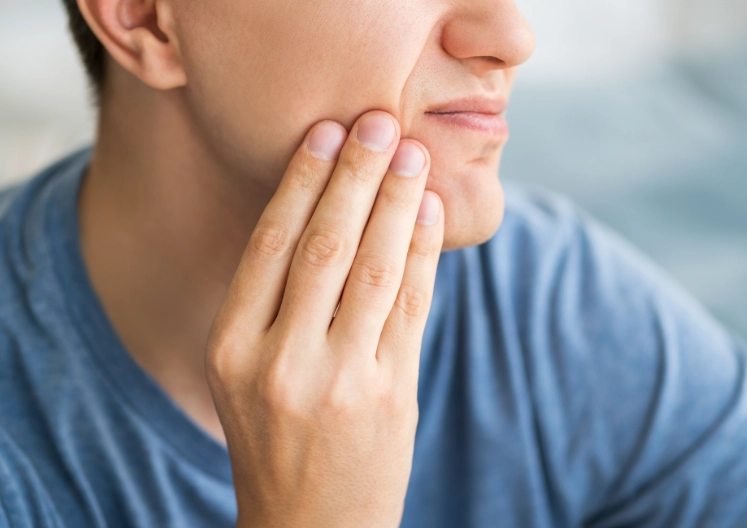
The Third 3: 3 Days to See a Dentist
This is the most critical, non-negotiable part of the entire 3-3-3 rule for toothaches. It is not a suggestion; it's the rule's entire purpose.
The first two 3's are about buying time. This third 3 is about using that time wisely to get to the root cause (pun somewhat intended). Toothaches don't get better on their own. They signal a problem—a deep cavity, a cracked tooth, an abscess, dying nerve tissue, advanced gum disease. None of these resolve without professional treatment.
Why 3 days? It's a realistic, urgent deadline. It acknowledges that you might not be able to see someone immediately (it's a Sunday night), but it prevents you from falling into the trap of "the pain went away, so I'm fine." Dental infections are sneaky. The pain can subside as the nerve dies or as the infection finds a new path, but the problem is still there, often getting worse and more expensive to fix.
So, while you're doing your 3-minute compress and your 3-hour avoidance, your next move is to pick up the phone and make an appointment. If the pain is severe, you have swelling in your face or jaw, fever, or trouble breathing/swallowing, forget the 3-day rule—go to an emergency dentist or an urgent care clinic immediately. These are signs of a serious infection that can spread.
When the 3-3-3 Rule Might Help (And When It Absolutely Won't)
Not all tooth pain is created equal. The effectiveness of this rule depends entirely on what's causing your agony. Let's be honest about its scope.
| Type of Toothache / Symptom | Will the 3-3-3 Rule Help Temporarily? | Why or Why Not? | What's *Really* Needed |
|---|---|---|---|
| Mild sensitivity to hot/cold/sweet (lasting seconds) | Possibly. The cold compress & avoidance can reduce triggers. | Often caused by enamel wear, gum recession, or a small cavity. | Dental exam for desensitizing treatment or a filling. |
| Dull, persistent ache or throbbing | May provide minor relief from cold, but unlikely to stop pain. | Often indicates pulp inflammation (pulpitis), a deep cavity, or a crack. | Urgent dental visit. Likely needs a filling, crown, or root canal. |
| Sharp, severe pain when biting down | The avoidance part is critical, but pain relief will be minimal. | Classic sign of a cracked tooth, large cavity, or failing filling. | Prompt dental care. Chewing will worsen the crack. |
| Constant, severe, pounding pain with visible gum swelling or a pimple on the gum | Cold compress may slightly reduce facial swelling, but will not touch the pain. | This is a dental abscess (infection). The pressure needs to be released. | Dental Emergency. Requires drainage, antibiotics, and root canal or extraction. |
| Pain with fever, facial swelling, difficulty swallowing | No. Do not wait. | Signs of a spreading, serious infection that can become life-threatening. | Go to Emergency Room or Urgent Dental Care immediately. |
See the pattern? The 3-3-3 rule is best suited for mild to moderate, manageable pain that you need to bridge over a short period until a dental appointment. It's for the "this really hurts and I need to sleep/get through my workday" scenario. For severe or infected pain, it's like using a band-aid on a gushing wound.
My own toothache turned out to be a nasty abscess. The cold compress took the edge off the swelling on my cheek for a little while, but the deep, relentless throbbing underneath didn't care about my bag of frozen peas. It was a stark reminder that first aid is just that—first aid.
Beyond the Rule: Other Safe, At-Home Measures (And What to Avoid)
While you're following the 3-3-3 protocol, you might wonder what else you can do. Some methods are safe and can be used in conjunction; others are terrible ideas that can cause more damage.
What You Can Try (Safely)
- Over-the-Counter Pain Relievers: Ibuprofen (Advil, Motrin) or naproxen (Aleve) are often more effective for dental pain than acetaminophen (Tylenol) because they reduce inflammation. Always follow the label instructions and check with a doctor if you have contraindications. Taking them with a little soft food can prevent stomach upset.
- Salt Water Rinse: This is a golden oldie for a reason. Dissolve half a teaspoon of salt in a cup of warm (not hot) water. Swish gently for 30 seconds and spit. It helps cleanse the area, reduce bacteria, and soothe inflamed gums. Do this a couple of times a day, but not right after the cold compress if the temperature contrast bothers you.
- Elevation: When sleeping or resting, prop your head up with an extra pillow. Keeping your head above your heart can help reduce blood pressure and throbbing in the affected area.
- Clove Oil (With Caution): This is a traditional remedy. Eugenol, the active component, has natural numbing properties. The key is indirect application. Put a drop or two on a cotton ball and place it next to the painful tooth, not directly on the gum, as it can burn. Or use an over-the-counter dental product containing eugenol. It has a very strong taste, fair warning.
What You MUST Avoid
In your desperation, please steer clear of these internet-famous but dangerous "remedies."
- Placing Aspirin Directly on the Tooth/Gum: This is a classic bad move. Aspirin is an acid. Holding it against your gum tissue will cause a chemical burn, leaving you with a painful ulcer on top of your toothache. Swallow it if you choose to take it, don't topicalize it.
- Using Alcohol or Hard Liquor as a Rinse/Gargle: While it might numb for a second, it's extremely drying and irritating to your oral mucosa. It can worsen the situation.
- "Killing the Nerve" with DIY Methods: Any suggestion involving sewing needles, bleach, or other household chemicals to "kill the nerve" is not only ineffective but horrifyingly dangerous and can lead to severe tissue destruction, poisoning, and a medical catastrophe.
- Excessive Heat: Don't use a heating pad on your cheek for a toothache. Heat increases blood flow and swelling, which will amplify the pain from inflammation or an infection.
Your Action Plan: From First Twinge to Dentist's Chair
Let's tie this all together into a practical, step-by-step plan for when tooth pain strikes. This goes beyond just answering "what is the 3-3-3 rule for toothaches" and shows you how to integrate it into a sensible response.
- Assess the Pain. Is it mild and annoying, or severe and debilitating? Is there swelling, fever, or trouble breathing? If it's severe or you have systemic symptoms, seek emergency care now.
- Initiate the 3-3-3 Rule. Apply a cold pack (wrapped in a thin cloth) to the outside of your cheek for 3 minutes. Commit to the 3-hour avoidance period of hard, hot, cold, and sugary things.
- Take an OTC Pain Reliever if you are able to, following package directions.
- Call a Dentist. This is not step 4 by importance, only by sequence. Do this as soon as you are able, ideally while you're in your 3-hour avoidance window. Explain your symptoms clearly. If it's after hours, call anyway—many practices have emergency contact information on their voicemail.
- Use Salt Water Rinses gently 2-3 times a day for comfort and cleanliness.
- Keep Your Head Elevated when resting.
- Go to Your Appointment. Even if the pain has subsided significantly by the time your appointment arrives, you MUST go. The problem hasn't vanished.
Honestly, the hardest part for most people is actually calling the dentist. The anxiety, the cost worry, the hope that it'll just go away—I get it. But pushing through that and making the call is the single most important action you can take.
Common Questions About the 3-3-3 Rule for Toothaches
You won't find it in official dental association treatment guidelines as a "rule," because it's not a treatment. However, the individual components—using cold compresses for swelling, avoiding irritants, and seeking prompt professional care—are absolutely standard, dentist-approved first aid advice. The 3-3-3 structure is just a handy, memorable way to package that good advice. Organizations like the American Dental Association stress the importance of seeing a dentist for toothaches and list cold compresses as a temporary measure, which aligns with the spirit of the rule.

Generally, no. For the vast majority of acute toothaches involving inflammation or infection, cold is the recommended therapy because it constricts blood vessels and reduces swelling. Heat typically does the opposite—it increases blood flow and can make inflammatory pain worse. There are rare exceptions for certain types of jaw muscle pain (TMJ disorders), but for a classic toothache, stick with cold.
Yes. A thousand times yes. This is the most dangerous misconception. The disappearance of pain often means the nerve inside the tooth has died. The infection, however, is still very much alive and can continue to spread into the bone and surrounding tissues silently, potentially leading to a much larger abscess. No pain does not equal no problem in dentistry.
You can repeat the cold compress step (3 minutes on, 20 minutes off) as needed for comfort, being careful not to give yourself frostbite on your cheek. The "3-hour avoidance" is just a guideline for immediate post-compress care; you should generally continue to avoid irritants until you see the dentist. The "3-day dentist" rule is a maximum deadline, not a goal. You shouldn't be cycling through the rule for weeks. If you find yourself needing to do that, you are actively avoiding necessary care.
You won't find clinical trials studying "the 3-3-3 rule" as a singular intervention. However, the principles it's based on are well-supported. Cryotherapy (cold therapy) for inflammation and pain management is a standard practice in medicine. The recommendation to avoid irritants and seek professional diagnosis is foundational. The rule is an application of established first-aid principles to a specific dental context. For evidence-based information on dental pain and emergencies, resources like the Mayo Clinic's first aid guide are excellent.
The Real Truth About Toothache First Aid
After going through this myself and researching it thoroughly, here's my take. The value of the 3-3-3 rule for toothaches isn't in its magical healing power—it has none. Its value is entirely in its psychology and structure.
When you're in pain and panicking, it gives you a clear, simple plan: "Do this, then this, then make that call." It cuts through the paralysis and the frantic, ineffective Googling. It legitimizes the use of a cold compress (which works) and reinforces the critical need to see a dentist. In that sense, it's a useful tool.
But we have to be clear-eyed about its limits. It's a first-aid mnemonic, like RICE (Rest, Ice, Compression, Elevation) for a sprain. It manages symptoms temporarily while you arrange for definitive care. You wouldn't use RICE for a broken leg for three weeks instead of going to the ER. Similarly, you shouldn't use the 3-3-3 rule as a substitute for dental treatment.
Tooth pain is your body's alarm system. The 3-3-3 rule is like hitting the snooze button a couple of times. It doesn't fix the problem that set off the alarm. Only a dentist can do that. So, by all means, use this rule to get some temporary relief and organize your thoughts. But let its final step—the 3-day deadline—be the push you need to get the professional help your mouth is begging for. Your future self, with a healthy, pain-free smile, will thank you.
For long-term prevention, regular check-ups and good oral hygiene are irreplaceable. The CDC's basics on oral health provide a great foundation for keeping these emergencies at bay.