Quick Guide
- Before You Buy: The 5-Minute Night Guard Checklist
- The Three Main Types of Night Guards Explained
- Deep Dive: What Makes a Great Night Guard?
- Head-to-Head: Breaking Down the Top Contenders
- Care, Maintenance, and Making It Last
- Your Night Guard Questions, Answered
- The Final Verdict: How to Make Your Choice
Let's be honest, waking up with a sore jaw, a dull headache, and the feeling you've been chewing on gravel all night is the worst. You know you grind your teeth. Your partner might have told you (politely, or not so politely). Your dentist has probably pointed out the wear on your molars. So you start searching for a solution, and suddenly you're drowning in options. Custom dental, boil-and-bite, over-the-counter soft ones... it's enough to make your head spin, which probably makes your jaw clench even more.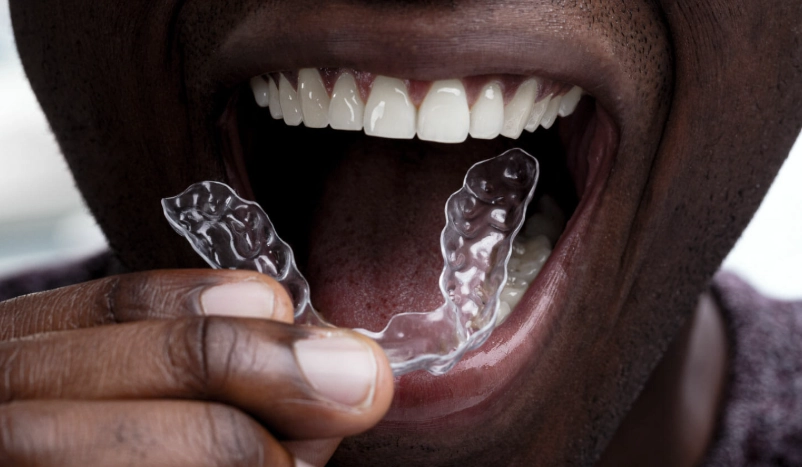
I've been there. I spent years trying different guards, wasting money on ones that fell out, felt like a hockey puck in my mouth, or disintegrated in three months. Finding the best night guard for teeth grinding isn't about finding the most expensive one. It's about finding the right one for you—your budget, your grinding severity, and your comfort tolerance.
This guide is what I wish I had. We're going to skip the fluff and marketing jargon. We'll break down exactly what matters, compare the real-world options, and answer the questions that keep popping up when you're lying awake at night (maybe grinding your teeth about night guards).
Quick Reality Check: A night guard (or occlusal guard) won't stop you from grinding or clenching (that's called bruxism). Its job is to be a sacrificial cushion between your upper and lower teeth. It absorbs the force, protects your enamel from wearing down, and can relieve pressure on your jaw muscles and joints. Think of it as a helmet for your teeth.
Before You Buy: The 5-Minute Night Guard Checklist
Jumping straight to product reviews is tempting, but it's a fast track to buyer's remorse. Ask yourself these questions first. The answers will point you in the right direction.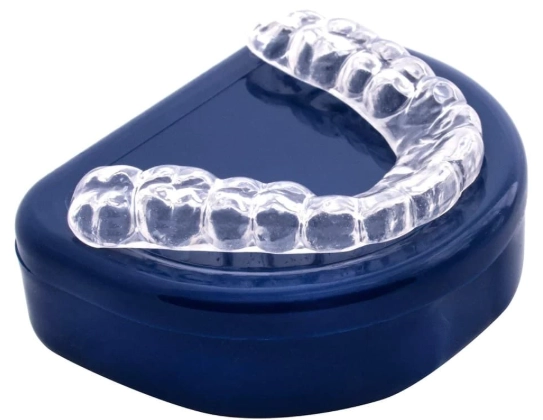
How Bad Is Your Grinding?
This is the big one. Are you a mild, occasional grinder, or do you wake up feeling like you've been in a fistfight with your pillow? Light grinders might get by with a softer, cheaper guard. Heavy grinders—the ones who can crack a guard in six months—need durability above all else. A thin, soft guard for a heavy grinder is like using tissue paper as armor.
What's Your Budget... Really?
Prices are all over the map. You can spend $20 or $600. Be realistic. A custom guard from your dentist is an investment, often $300-$800. Direct-to-consumer custom labs online are a middle ground ($100-$250). Store-bought boil-and-bite kits are the budget option ($20-$60). Know what you're willing to spend before you fall in love with a premium option.
Watch Out: Don't forget to check your dental insurance! Many plans cover a portion of a professionally made night guard, especially if it's deemed medically necessary to prevent damage. A call to your insurer could save you hundreds.
What's Your Tolerance for Bulk?
Some guards are slim and low-profile. Others are thicker and more substantial. If you have a strong gag reflex or a small mouth, bulk matters a lot. I made the mistake of getting a very thick guard early on and couldn't sleep with it. It felt like I had a mouthful of plastic.
Are You Looking for Long-Term or a Temporary Fix?
Is this a "let me try something to see if it helps" purchase, or are you committed to a long-term solution? The answer guides your initial investment.
Got your answers? Good. Now let's look at the actual types of guards. This is where most people get confused.
The Three Main Types of Night Guards Explained
Understanding these categories is crucial. Each has a different purpose, feel, and price tag. Calling one the "best" overall is meaningless—it depends entirely on your situation from the checklist above.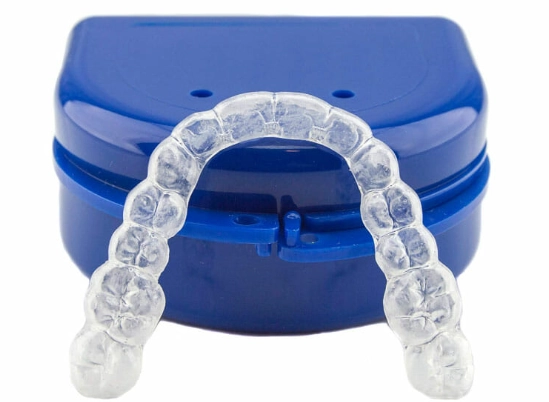
| Type | How It's Made | Best For | Typical Cost | Lifespan |
|---|---|---|---|---|
| Custom Dental Lab (Dentist-Made) | Dentist takes physical/digital impressions. Sent to a professional dental lab. Made from hard acrylic or layered materials. | Heavy grinders, TMJ issues, need for perfect fit & durability, long-term users. | $300 - $800+ (before insurance) | 3 - 10+ years (with care) |
| Direct-to-Consumer Custom (Online Labs) | You take impressions at home with a kit. Mail it back. Lab creates a custom guard from their materials. | Those wanting a custom fit for less, moderate grinders, comfortable middle-ground. | $100 - $250 | 1 - 3 years |
| Boil-and-Bite (Over-the-Counter) | You soften a thermoplastic guard in hot water, then bite down to mold it to your teeth. | Mild grinders, budget-conscious, trying a guard for the first time, temporary use. | $20 - $60 | 6 months - 1 year |
| Pre-formed Soft (Over-the-Counter) | One-size-fits-most soft plastic guard, often sold in multi-packs. | Very mild, occasional clenching. Not recommended for serious grinding. | $10 - $30 (for pack) | 1 - 3 months |
See the differences? A pre-formed soft guard and a dentist-made hard acrylic guard are solving different problems for different people.
My first guard was a cheap boil-and-bite from a drugstore. It helped with the jaw pain almost immediately, which was a revelation. But after about four months, I had bitten completely through it. That's when I knew my grinding was worse than "mild" and I needed to upgrade. It was a useful, cheap diagnostic tool.
Deep Dive: What Makes a Great Night Guard?
Let's get technical for a minute, but in plain English. When you're comparing options, these are the specs and features that actually matter.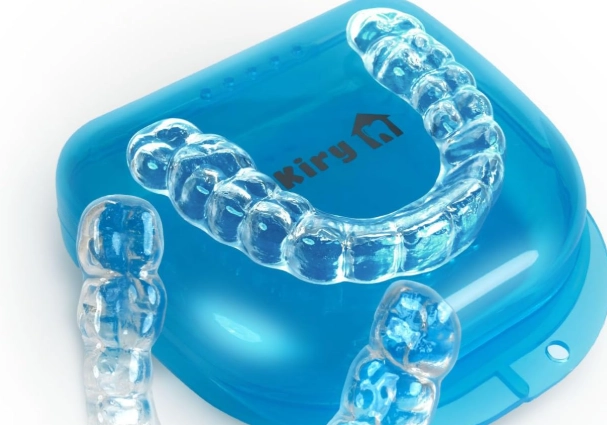
Material: Hard, Soft, or Something in Between?
Hard Acrylic: The gold standard for durability. Used in most high-end custom guards. It doesn't give your jaw muscles much to grip onto, which some experts believe can help reduce muscle activity over time. Very difficult to bite through. Downside? It can feel bulky and takes the longest to get used to.
Multi-Laminate/Sofort: A popular material for online custom guards. It has a hard outer shell for durability and a softer inner layer for comfort. This is a fantastic compromise. It provides protection without feeling like you're biting on a rock.
Thermoplastic (Boil-and-Bite): This is what most OTC kits use. It's a semi-rigid plastic that softens with heat. Protection is decent for the price, but it's not as durable as lab-made materials. Heavy grinders will chew through it.
Soft Plastic/Rubber: Found in cheap, pre-formed guards. The problem? Because it's soft, your jaw muscles can clench and grind against it more vigorously. It can actually make grinding worse for some people. The American Academy of Sleep Medicine generally cautions against soft guards for this reason. They're really just a barrier, not a therapeutic device.
Fit and Coverage: Full vs. Partial
Most guards are "full arch," covering all your upper or lower teeth. Some are "partial" or "anterior," only covering the front teeth. Full coverage distributes force more evenly and is more stable. Partial guards are less bulky but may not be suitable for heavy grinding or if you have dental work on your back teeth. Your dentist can advise on this.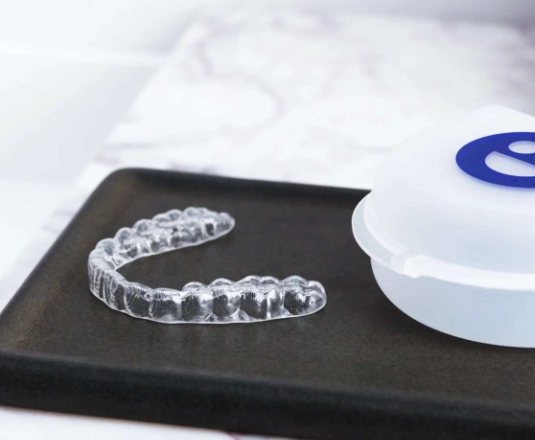
Thickness: The Millimeter that Matters
Thickness is usually measured in millimeters (mm). A 1.5mm guard is quite thin and discreet. A 3mm+ guard is very substantial. Thicker = more durable and more cushioning, but also more bulk. Most custom guards are in the 2mm-3mm range. This is a key detail to ask about when ordering.
Pro Tip: If you have TMJ disorder (TMD), your dentist or a specialist (like a prosthodontist or orofacial pain specialist) might design a specific type of guard called an orthotic or stabilization splint. These are highly customized for jaw positioning, not just tooth protection. Don't self-diagnose TMJ issues—see a professional.
Head-to-Head: Breaking Down the Top Contenders
Okay, let's talk about specific products and services. I'm not going to list a hundred options. Here are the ones that consistently come up as leaders in their respective categories, based on user reviews, dental forums, and my own experience.
The Dentist-Made Champion
There's no specific brand here—it's the process. A guard made by a professional lab from your dentist's impressions is the benchmark. The fit is unparalleled. The materials are medical-grade and long-lasting. It's adjusted and polished by your dentist to ensure it's smooth and doesn't interfere with your bite.
Pros
- Perfect, precise fit that only a professional impression can provide.
- Highest durability. Can last for many years, making it cost-effective over time.
- Your dentist can adjust it for optimal jaw positioning and comfort.
- Often covered partially by dental insurance.
- You have a professional to call if there are issues.
Cons
- Very high upfront cost. The biggest barrier.
- Requires at least two dental visits (impression and fitting).
- Can feel bulky initially due to the robust materials.
Is it the best night guard for teeth grinding? For heavy grinders and those with TMJ concerns, the answer is often yes, despite the cost.
The Online Custom Standouts
These companies have disrupted the market. You get a custom-fit guard without the dentist's office markup. The process is similar: they send you an impression kit, you send it back, they make your guard. Quality varies, but the top players are good.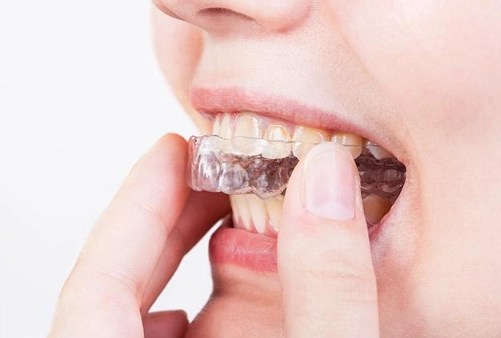
What to look for in a good online service: Clear instructions for the impression kit, good customer service if you mess up the impression, use of a multi-laminate or durable material, and a warranty (at least 6 months). Companies like Remi, SleepRight (Custom Comfort), and ClearClub are frequently mentioned. Read the fine print on their return/refit policies.
I used an online service for my current guard. The impression process was nerve-wracking—you get one shot to get it right. My first try was bad, and they sent a new kit for free. The guard I got is excellent: a hard-soft composite that's comfortable and has held up for over two years now. For about one-third the cost of my dentist's quote, it was a win.
The Best Boil-and-Bite for Beginners
If you're going the OTC route, don't buy the absolute cheapest pack. Spend a little more for a better design. The SleepRight Fusion is a standout. It's unique because it has a soft, flexible outer layer for comfort and a harder, more durable inner core. It's easier to fit than some, and it's one of the few OTC guards that acknowledges the need for both comfort and substance.
The classic Plackers Grind No More or DenTek Professional-Fit are also decent entry points. Just go in with realistic expectations. They are temporary solutions and training wheels.
A good boil-and-bite can be a legitimate best night guard for teeth grinding for someone on a tight budget or with mild symptoms.
Care, Maintenance, and Making It Last
You've spent the money. Now don't ruin it. A night guard lives in the dark, wet environment of your mouth and then a case. It's a breeding ground for bacteria and plaque if you're not careful.
- Clean it every morning. Don't just rinse it. Brush it gently with a soft toothbrush and mild soap (unscented dish soap is perfect) or a non-abrasive toothpaste. Never use hot water, as it can warp the plastic.
- Soak it weekly. Use a denture cleaner or a specific retainer/night guard cleaning tablet. This kills germs and removes deeper stains.
- Store it dry and in its case. After cleaning, let it air dry completely before closing the case. A damp guard in a closed case is a petri dish. Keep the case clean too!
- Don't chew on it. This seems obvious, but some people absentmindedly clamp down on it during the day. It's for sleeping only.
If your guard cracks, develops sharp edges, or feels loose, stop using it immediately. A damaged guard can hurt your gums, cheeks, or even alter your bite. It's time for a replacement or a visit to your dentist for an adjustment.
Your Night Guard Questions, Answered
I've scoured forums, Reddit threads, and dental Q&As. These are the questions people actually ask.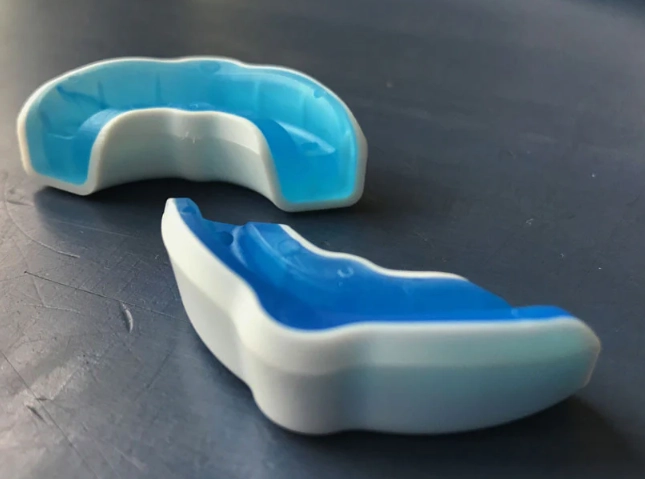
Will a night guard change my bite or move my teeth?
A properly fitted guard should not permanently change your bite. It sits on your teeth while you sleep and you remove it in the morning. Your teeth should settle back into their natural position. However, a poorly fitted guard—especially a thick, ill-fitting boil-and-bite—can potentially cause minor shifting over a very long time. This is why the fit from a dentist or quality lab is superior.
How long does it take to get used to sleeping with one?
Anywhere from a few nights to two weeks. The first night is almost always weird. You might produce more saliva or feel the urge to push it out with your tongue. Persist. Wear it for an hour before bed while reading or watching TV to acclimatize. Most people adapt quickly, and the relief from morning pain becomes a powerful motivator.
My guard makes me gag. What can I do?
This is usually a bulk or length issue. A guard that extends too far back on your palate can trigger the reflex. Solutions: 1) Ask your dentist to trim it back if it's a custom guard. 2) If it's a boil-and-bite, you may have pushed it too far back when molding it. Try a new one and be more careful. 3) Consider a partial coverage guard that only covers the front teeth, though this isn't ideal for everyone.
Can I use a sports mouthguard instead?
No.
They are designed for entirely different purposes. Sports guards are for impact protection, are usually very bulky, and aren't designed for the precise, repetitive forces of grinding night after night. They are not a substitute for a proper occlusal guard.
My dentist recommended a guard for my lower teeth. Is that okay?
Yes, lower guards are common and sometimes preferred. Some people find them less intrusive. They work on the same principle. The decision often comes down to personal comfort, dental work you may have, and your dentist's assessment of your jaw mechanics.
The Final Verdict: How to Make Your Choice
So, after all this, what's the best night guard for teeth grinding? Let's match the person to the product.
Choose a Custom Dental Lab Guard if: Money is less of an object, you are a severe grinder, you have TMJ/TMD issues diagnosed by a professional, or you want the single most durable, long-term solution. This is the "buy it for life" option (or at least, for a decade).
Choose a Direct-to-Consumer Online Guard if: You want a great balance of custom fit and reasonable cost. You're a moderate grinder, you're handy enough to follow impression instructions, and you want something more substantial than a drugstore option without the dentist price tag. This is the sweet spot for many.
Choose a Quality Boil-and-Bite Guard if: You are a first-timer with mild symptoms, you are on a strict budget, or you need a temporary solution while waiting for a custom guard or a dental appointment. Think of it as a diagnostic step or a short-term fix.
Regardless of your choice, mention your teeth grinding to your dentist at your next check-up. They can check for progressive damage and give you personalized advice. The American Dental Association and the Mayo Clinic have reliable patient resources on bruxism that are worth reading for a medical perspective.
The goal is to stop the damage and get better sleep. Any guard that does that for you, comfortably and within your means, is a good guard. It might take a try or two to find your perfect match. Don't get discouraged. That first morning without jaw pain is worth every bit of the hassle.
Sweet dreams, and quiet grinding.
Leave a Reply