In This Guide
- What Exactly Is a Deep Cleaning? It's More Than Just a Fancy Polish
- The Million-Dollar Question: When Is It TRULY Necessary?
- What Does the Deep Cleaning Process Actually Feel Like?
- The Cost and Insurance Maze
- What Happens If You Skip a Necessary Deep Cleaning?
- Life After the Deep Clean: It's Not a One-and-Done Deal
- Common Questions & Concerns (The Stuff You're Actually Searching For)
- The Bottom Line: How to Make Your Decision
Let's be real. You go in for your regular check-up, feeling pretty good about your brushing and flossing game. Then the dentist drops the "D" word. Deep cleaning. Your mind instantly goes to the bill, the potential discomfort, and that nagging question: is this just an upsell, or is a dental deep cleaning ever really necessary for me?
I've been there. A close friend of mine, let's call him Mark, was in that exact spot last year. He's diligent, but genetics haven't been kind to his gums. His dentist recommended it, and he spent weeks agonizing, searching online, and asking everyone he knew. The information out there is a confusing mix of scary warnings and dismissive "it's a scam" takes. Not helpful.
So, let's cut through the noise. This isn't about scaring you into a procedure. It's about giving you the clear, detailed information you need to have an informed chat with your dentist. Because the answer to "is a dental deep cleaning ever really necessary?" isn't a simple yes or no. It's a solid "it depends," and here’s exactly what it depends on.
What Exactly Is a Deep Cleaning? It's More Than Just a Fancy Polish
First, we need to clear up what we're even talking about. A regular cleaning (prophylaxis) is like tidying up the living room. It cleans the surfaces of your teeth above the gumline, removing plaque and tartar you can see. It's preventive maintenance.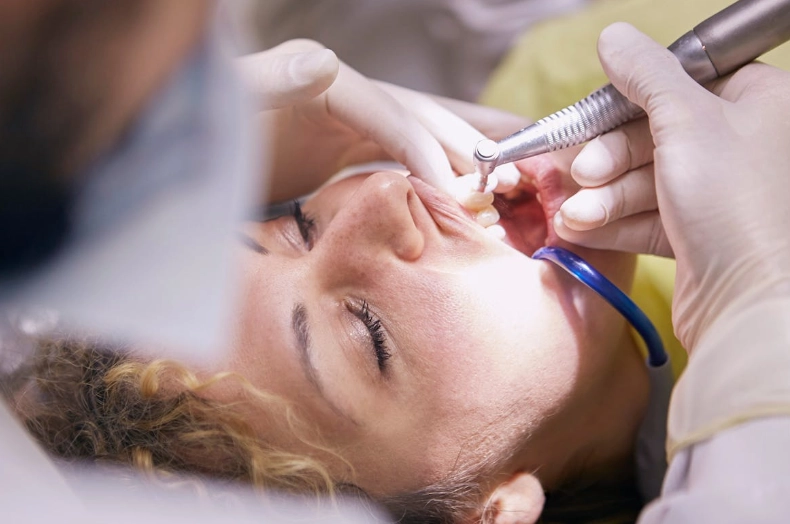
A deep cleaning, medically termed scaling and root planing (SRP), is a different beast. Think of it as a deep, therapeutic clean for the foundation of your house. It targets the area below your gumline, where your tooth roots live. When gum disease (gingivitis or periodontitis) sets in, it creates pockets between your gums and teeth. Bacteria and hardened tartar (calculus) build up on the root surfaces in these pockets, which your toothbrush and a regular cleaning can't reach.
The procedure usually involves two main steps, often split between two appointments (one for each side of the mouth):
- Scaling: This is the careful removal of all that plaque and tartar from the tooth surfaces, both above and, crucially, below the gumline. Special instruments are used to get deep into those pockets.
- Root Planing: This is the smoothing out of the tooth root surface. Bacteria love rough, irregular surfaces. By making the root smooth, it's harder for new bacteria to stick, and it allows your gum tissue to reattach to the tooth more healthily.
It's not just a more intense version of your usual clean. It's a targeted treatment for an active infection. That's the key distinction most people miss.
The Million-Dollar Question: When Is It TRULY Necessary?
This is the heart of the matter. Your dentist isn't just guessing. They use specific, measurable signs to diagnose periodontal disease. The decision isn't based on how your teeth look on the surface, but on the health of the structures holding them in place.
Here are the concrete signs that answer "yes, a dental deep cleaning is likely necessary":
1. You Have Periodontal Pockets Over 4mm
During your check-up, the hygienist or dentist uses a tiny ruler called a periodontal probe to measure the space between your gum and tooth. Healthy gums have pockets of 1-3mm (they're snug).
If multiple pockets measure 4mm or deeper, especially if they bleed when probed, it's a red flag. Pockets of 5mm, 6mm, or more indicate that the attachment between gum and tooth is breaking down. A regular cleaning simply cannot effectively clean inside a 5mm pocket. The bacteria and calculus are too far down. This is the single most objective, clinical reason for SRP.
2. Visible Tartar Build-Up Below the Gumline
Sometimes, on X-rays, the dentist can see calculus (that rock-hard plaque) as dark shadows on the roots of your teeth, below the bone level. This is a smoking gun. That material is teeming with bacteria causing constant inflammation and bone loss. It must be removed to stop the disease, and only scaling can do that.
3. Active Bone Loss Visible on X-Rays
Healthy bone holds your teeth in place like a socket. Gum disease eats away at that bone. Your dental X-rays provide a historical record. If the dentist compares current X-rays to older ones and sees the bone level has receded (it looks less tall around the tooth root), it's evidence of active, ongoing periodontitis. This is a serious sign. Deep cleaning is the first-line, non-surgical treatment to halt this process.
Let's put this in a table to make it crystal clear when a deep cleaning shifts from "maybe" to "medically indicated":
| Situation/Measurement | What It Means | Likely Treatment Path |
|---|---|---|
| Gingivitis Pockets: 1-3mm, Bleeding Gums | Inflammation confined to the gums. No permanent damage to bone or attachment. | Usually reversible with an excellent regular cleaning and improved home care. Deep cleaning typically not needed. |
| Mild Periodontitis Pockets: 4-5mm, Some Bone Loss | Disease has started to affect the bone and connective tissue. | Deep Cleaning (SRP) is the standard, necessary treatment to remove subgingival bacteria and stop progression. |
| Moderate/Severe Periodontitis Pockets: 6mm+, Significant Bone Loss, Possible Tooth Mobility | Advanced infection causing noticeable damage and threatening tooth loss. | Deep Cleaning is absolutely necessary, often followed by more frequent maintenance (periodontal maintenance) and possibly surgical evaluation. |
| No Pockets >3mm, No Bleeding, No Bone Loss | Healthy periodontal status. | Regular preventive cleanings are perfect. A deep cleaning would be unnecessary and inappropriate. |
See the pattern? The necessity hinges on measurable, objective disease. It's not about how often you flossed last month; it's about the current, physical state of the foundation of your teeth. If you have those deeper pockets and/or bone loss, then yes, a dental deep cleaning is really necessary to get the infection under control. It's the foundational treatment.
I remember Mark asking me, "But my teeth don't hurt! Why do I need this?" That's the sneaky thing about gum disease. It's often painless until it's very advanced. Discomfort isn't a reliable indicator.
What Does the Deep Cleaning Process Actually Feel Like?
The fear of the unknown is huge. Let's walk through it.
First, they'll almost always numb the area. This isn't optional for a proper deep cleaning. You'll get local anesthesia, just like for a filling. The goal is for you to be comfortable. You'll feel pressure and the movement of instruments, but no sharp pain. If you do feel anything sharp, you raise your hand and they'll give you more numbing. It's that simple.
The appointment itself is longer than a regular cleaning—maybe 60-90 minutes for one quadrant (a quarter of your mouth). They work methodically, tooth by tooth, using both ultrasonic scalers (which vibrate and spray water) and hand instruments to meticulously clean each root surface.
Afterwards, once the numbness wears off, you can expect some soreness and sensitivity, like a bruised feeling in your gums, for a few days. Your gums are healing from an intensive therapy. Over-the-counter pain relievers, soft foods, and avoiding very hot or cold things usually manage it fine. Some slight bleeding when you brush is normal initially.
My friend Mark's biggest worry was the pain. He's not great with dental visits. After his first appointment, his exact text was: "Weirdly fine. The shots were the worst part, and then it was just... vibrations. My mouth feels tired and a bit achy now, but not terrible." Managing expectations is half the battle.
The real work begins after you leave the office. The deep cleaning sets the stage, but you are the main actor in maintaining the results.
The Cost and Insurance Maze
Let's talk money, because this is a major factor. A deep cleaning is significantly more expensive than a regular cleaning, often costing several hundred dollars per quadrant. The total can easily reach $1000-$2000 or more without insurance.
Most dental insurance plans that include periodontal coverage will pay for a significant portion of SRP if it's deemed medically necessary (again, those pocket measurements and X-rays are key for insurance approval). They often require pre-authorization. But here's the catch: many plans have a "waiting period" for periodontal treatment or limit how often you can have it (e.g., once every few years).
You must talk to your dental office's insurance coordinator. Get a pre-treatment estimate. Understand your copay. And please, don't let cost alone be the reason you refuse a necessary treatment. Many offices offer payment plans. Treating gum disease early is almost always cheaper than dealing with the consequences later—like tooth loss, bone grafts, or implants.
Is skipping it to save money now a smart bet? Rarely.
What Happens If You Skip a Necessary Deep Cleaning?
This is the part most "it's a scam" articles gloss over. Periodontitis is a chronic, inflammatory disease caused by bacteria. If you have it and don't treat it, it doesn't just stay the same. It progresses.
- The bone loss continues. Slowly, silently. Your teeth lose more and more of their supporting foundation.
- Pockets get deeper. Deeper pockets harbor more aggressive bacteria, making the problem worse and harder to clean.
- Teeth become loose. As bone disappears, teeth can shift, flare out, or become mobile.
- Eventually, you risk tooth loss. This isn't scare-mongering; it's the documented, well-understood progression of untreated periodontal disease. The American Academy of Periodontology has extensive resources on this progression.
- It's linked to systemic health. While correlation isn't always causation, significant research, including studies highlighted by the CDC, suggests strong associations between severe gum disease and increased risk of heart disease, stroke, poorly controlled diabetes, and respiratory issues. The chronic inflammation in your mouth can affect your whole body.
So, when you ask, "Is a dental deep cleaning ever really necessary?", you also have to ask, "What is the cost of not doing it if I have the disease?" The cost is often the long-term health and stability of your teeth.
Life After the Deep Clean: It's Not a One-and-Done Deal
A huge misconception is that you get a deep cleaning and then go back to yearly cleanings. That's a recipe for quick relapse. After SRP, you graduate to periodontal maintenance (PM). These are cleanings every 3-4 months, not 6.
Why so often? The bacteria that cause gum disease repopulate the pockets within weeks to a few months. Periodontal maintenance is a tighter monitoring and cleaning schedule to keep those pockets shallow and disease at bay. It's the crucial follow-up phase. Skipping these appointments often means the disease will reactivate, and you'll be back at square one, needing another SRP or more invasive surgery.
Your home care also needs to level up. Your hygienist will likely recommend specific tools: an electric toothbrush, a water flosser, and/or interdental brushes (like tiny bottle brushes that go between teeth). The goal is to disrupt the bacterial plaque daily, down to the bottom of the now-reduced pockets.
Common Questions & Concerns (The Stuff You're Actually Searching For)
Antibiotic rinses or gels (like Arestin) can be a helpful adjunct to SRP, placed in deep pockets after scaling. But they are not a replacement. You can't rinse away or kill bacteria that are shielded by hardened tartar. The physical removal of the calculus (scaling) is non-negotiable. The Mayo Clinic's treatment overview confirms scaling and root planing as the cornerstone of therapy.
This happens. Get the clinical data. Ask both offices for your periodontal charting (the pocket depth numbers) and have them show you the bone loss on the X-rays. One dentist might have a more aggressive treatment threshold than another. If one sees only a couple of 4mm pockets and the other sees generalized 5mm pockets with bleeding, that's a big difference. The numbers don't lie. Go with the one who shows you the evidence and explains it clearly.
With proper anesthesia, the procedure itself should not be painful. Discomfort and sensitivity for a few days after is normal. If a dentist suggests doing it without numbing for "superficial" pockets, be very wary. Proper subgingival scaling on root surfaces requires anesthesia for patient comfort and thoroughness.
Initial gum soreness subsides in 2-5 days. The deeper healing—gums tightening, redness reducing, pockets potentially shrinking—takes place over 4-6 weeks, which is why a re-evaluation appointment is usually scheduled around then to re-measure your pockets.
The Bottom Line: How to Make Your Decision
So, after all this, is a dental deep cleaning ever really necessary? The final answer lies in your own mouth's clinical presentation.
It IS likely necessary if: Your periodontal chart shows multiple pockets of 4mm or deeper that bleed, and/or your X-rays show active bone loss. In this case, it's a legitimate treatment for an active disease, not an optional upgrade.
It is likely NOT necessary if: Your pockets are all 3mm or less, your gums don't bleed on probing, and your X-rays show stable, healthy bone levels. In this case, a regular preventive cleaning is perfect.
Your job is to be an informed participant. At your appointment:
- Ask for your pocket numbers. Say, "Can you tell me what my periodontal probing depths are?"
- Ask to see the X-rays. Say, "Can you show me where, if anywhere, you see bone loss compared to my old X-rays?"
- Ask why. "Based on these numbers and X-rays, why is a deep cleaning the recommended treatment for me versus a regular cleaning?"
A good dentist or hygienist will welcome these questions and be transparent with the data. If they get defensive or dismissive, that's a red flag.
Ultimately, the goal is to keep your teeth for a lifetime. Sometimes that requires this more involved, therapeutic step. It's an investment in stopping a silent disease in its tracks. Don't let fear or cost alone dictate your choice. Get the facts, understand the "why," and then you can confidently decide what's right for your long-term health. Because knowing exactly when a dental deep cleaning is really necessary takes the anxiety out of the equation and puts you back in control.