Sourdough Starter Guide: Fix a Weak Starter Fast
Most sourdough starter problems are not mysterious. They come down to three things I see over and over: feeding ratios, temperature, and timing. This sourdough starter guide focuses on what actually fixes a weak starter instead of just giving you another pretty schedule to follow. A starter that rises reliably should double in 4 to 8 hours at around 75°F (24°C). If yours barely moves, the problem is usually one of the basics.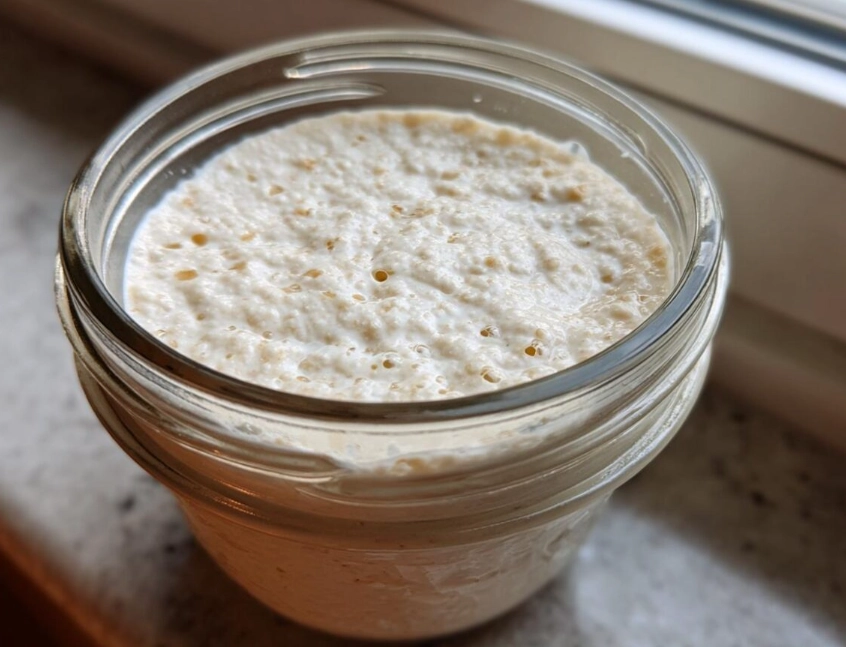
What’s Inside (Jump to the Fix)
What Is a Sourdough Starter, Really?
A sourdough starter is flour and water that has been colonized by wild yeast and bacteria. That’s it. The yeast produces gas, the bacteria produce flavor. When the starter is active, it traps gas and expands. When it’s weak, it might bubble but not rise.
I keep my starter in a 1-quart glass jar with a loose lid. Not clamped. Not sealed. Wild yeast needs airflow, and a sealed jar builds pressure and can go anaerobic. I’ve seen beginners use airtight containers and wonder why the starter smells like nail polish remover. That smell means the environment is too anaerobic. Move it to a jar with a loose lid or a breathable cloth cover.
One more thing people miss: starter strength is about the population of yeast, not the volume of flour. A tiny amount of vigorous starter will outperform a huge jar of sluggish starter every time. So stop feeding a weak starter massive amounts. You’re diluting it.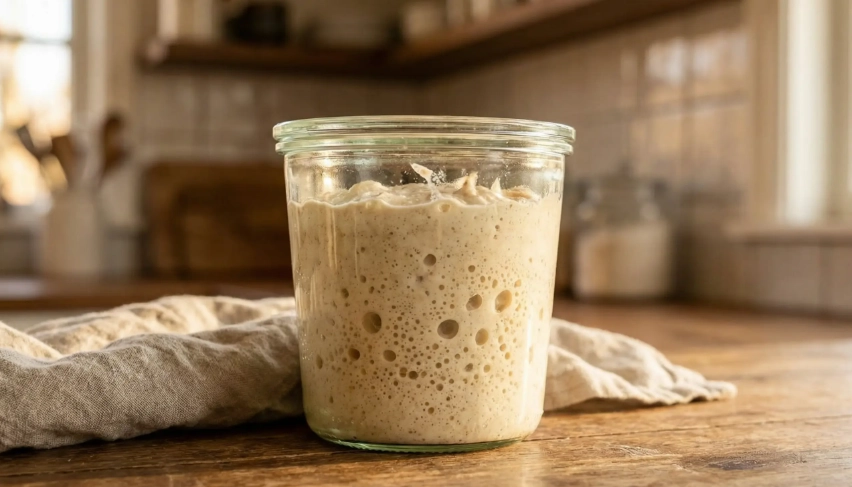
How to Feed a Sourdough Starter the Right Way
The feeding ratio matters more than most recipes admit. A 1:1:1 ratio (starter:flour:water) works for maintenance, but it’s a weak feed if your starter is struggling. For a sluggish starter, use 1:2:2 or even 1:5:5. That gives the yeast more fresh food and less acidic environment.
Step-by-step feeding (for a weak starter)
- Discard all but 1 tablespoon (about 15g) of starter. Yes, that little. A smaller amount of starter means less acid buildup.
- Add 30g lukewarm water (75–80°F). Not hot. Hot water kills yeast.
- Stir in 30g unbleached all-purpose or bread flour. Whole wheat can help boost wild yeast initially, but too much whole grain can make the starter overly acidic. I use 50/50 all-purpose and whole wheat for the first few days of reviving a weak starter, then switch to all-purpose.
- Stir vigorously for 20 seconds. You want to incorporate air. This is a step many people skip. Yeast needs oxygen to multiply.
- Mark the jar with a rubber band at the current level. This is your honesty check. No guessing.
- Leave at 75–78°F (24–26°C) for 4–6 hours. If your kitchen is colder than 70°F, put the jar in the oven with the light on (door cracked open).
Feed once or twice a day at this ratio. Within 3 to 4 days you should see a consistent rise. I’ve revived starters that sat in the back of a fridge for six months using this exact method. The key is patience with the ratio, not adding more flour.
Sourdough Starter Troubleshooting: Why It Won’t Rise
Here’s the non-consensus part: most “dead” starters are not dead. People throw them out too soon. The real problem is usually one of these four things, and I’ve ranked them by how often I see them in real kitchens:
| Problem | What it looks like | Fix |
|---|---|---|
| Overfeeding | Starter smells bland, thin, never rises | Drop the ratio to 1:1:1 for a week; stop adding huge amounts of flour |
| Cold temperature | Bubbles but no rise | Move to 75–78°F; use oven with light on |
| Acidity buildup | Smells like vinegar or acetone; gray liquid on top | Discard all but 15g; feed 1:5:5; repeat for 2 days |
| Chlorinated water | No activity after feeding | Switch to filtered or bottled water; let tap water sit out overnight |
I once spent two weeks trying to revive a starter that turned out to be sitting next to a bowl of cut onions. The sulfur compounds in the air slowed it down. Sounds ridiculous, but it happened. Starters are sensitive to their environment. Keep them away from strong-smelling foods.
A Realistic 7-Day Sourdough Starter Schedule
This is the schedule I give to friends who want a starter that actually works. It’s not fancy. It’s built around a normal workday.
- Day 1: Mix 30g whole wheat flour + 30g water. Stir. Cover loosely. Leave at room temp.
- Day 2: Add 30g all-purpose flour + 30g water. Stir. No discard yet.
- Day 3: Discard half. Feed 30g all-purpose + 30g water. You might see bubbles.
- Day 4: Discard all but 30g. Feed 30g all-purpose + 30g water. Start watching for a rise.
- Day 5: If it rose and fell, it’s active. Feed 1:2:2 every 12 hours. If no rise, keep temp warmer.
- Day 6: Feed 1:2:2 every 12 hours. Starter should double within 6 hours.
- Day 7: Your starter is ready for baking. Feed 1:1:1 once a day for maintenance, or store in the fridge and feed weekly.
If you want a more authoritative schedule, the King Arthur Baking Company’s starter guide is solid and aligns with this method. I’ve cross-checked my ratios against their published guidance, and they’re consistent with what works in a home kitchen.
Sourdough Starter FAQ
My starter smells like acetone after I feed it. What does that mean?
Acetone smell is a hunger signal. The yeast has run out of food and is producing a solvent-like compound. It’s not dangerous, but it means your starter is too acidic. Discard all but 15g, feed at 1:5:5, and repeat for two days. Don’t feed more flour without discarding first—that just dilutes the problem.
Can I leave my sourdough starter in the fridge for a month without feeding it?
You can, but you’ll pay for it. A month in the fridge means the starter has been starving, and the yeast population drops. I’ve done it and revived it, but it takes 3 to 5 days of twice-daily feeds to get it back to full strength. If you bake weekly, feed it once a week and it’ll stay strong.
Why does my starter rise and then fall before I’m ready to bake?
That’s normal. The starter peaks and then collapses because the food runs out. The sweet spot for baking is right at the peak—when it’s domed and bubbly, not after it has sunk. If your starter peaks in 4 hours, you need to feed it and bake sooner. If you can’t bake at peak, feed it again and wait for the next peak.
Is it okay to use tap water for my sourdough starter?
Depends on your tap water. If it smells like chlorine, it will slow down your starter. Let it sit out overnight so the chlorine evaporates, or use filtered water. I use filtered water because my city water is heavily chlorinated, and the difference in starter vigor was noticeable within two feedings.
This article was fact-checked against published baking science and my own kitchen testing.



Comments