Let's clear up a big myth right away. Many parents think orthodontics starts when all the baby teeth are gone. You wait until the teenage years, get braces for a couple of years, and you're done. If you're following that plan, you might be missing a critical window to guide your child's facial growth and prevent much more serious problems later. That's what early orthodontic treatment, often called Phase 1 or interceptive treatment, is all about. It's not primarily about aesthetics for a seven-year-old. It's about orthopedics—guiding the growth of the jaws themselves to make room for permanent teeth and create a balanced facial structure.
I've seen too many families come in with 13-year-olds needing extractions or even jaw surgery because simple guidance at age 8 could have changed everything. The goal here is to make any future orthodontic work simpler, less invasive, and more stable.
Your Quick Guide to This Article
- What Early Treatment Actually Means (Beyond Braces)
- The "Sweet Spot": When is the Best Age for an Evaluation?
- 7 Signs Your Child Might Need Early Intervention
- What Does the Early Orthodontic Treatment Process Look Like?
- Costs, Insurance, and The Real Value Proposition
- Your Top Questions, Answered with Straight Talk
What Early Orthodontic Treatment Actually Means (Beyond Braces)
Think of it as preventive orthopedics for the face. While comprehensive braces (Phase 2) move teeth into their final positions, Phase 1 focuses on the underlying foundation. The American Association of Orthodontists recommends a check-up with an orthodontist no later than age 7. At this age, we have a mix of baby and permanent teeth, giving us a clear roadmap of developing issues.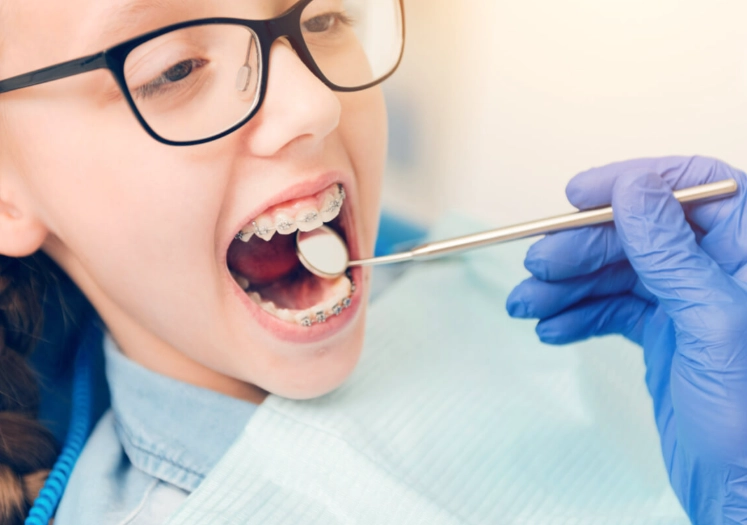
The tools here are different. You'll see fewer traditional metal braces and more:
- Palatal Expanders: A common device that gently widens the upper jaw to correct a crossbite and create space. It addresses the bone, not just the teeth.
- Space Maintainers: If a baby tooth is lost too early, this holds the space open so the permanent tooth has a place to erupt.
- Functional Appliances: Things like headgear or Herbst appliances that encourage the lower jaw to grow forward if it's underdeveloped.
- Limited Braces: Sometimes, braces are placed on just a few key teeth to correct a specific issue like a rotated tooth blocking others.
The objective is never perfection at age 9. It's to set the stage for a healthier, easier, and often shorter second phase of treatment in the early teens.
The "Sweet Spot": When is the Best Age for an Evaluation?
The magic number is 7. Not 6, not 10. Seven. Why? By this age, the first adult molars and incisors have usually erupted. This gives an orthodontist a reliable glimpse into the relationship between the jaws, spacing issues, and bite problems. It's the perfect time to spot a developing issue while the child is still growing rapidly and their bones are more malleable.
A Real-World Scenario: Leo's Story
Leo's parents brought him in at age 8 because his front teeth were very crowded. His upper jaw was narrow, and his lower jaw was slightly behind. Instead of just watching and waiting, we used a palatal expander for 9 months. It wasn't painful, just a little awkward at first. By age 9, his jaw was wider, his airway was improved (he stopped snoring), and there was visible space for his permanent canines to come in. Now at 12, he's ready for Phase 2 braces, which will likely be on for only 12-18 months instead of 2-3 years, and we won't need to discuss extracting teeth to make room. That's the interceptive win.
Waiting until age 12 or 13 means you're correcting a problem on a nearly finished foundation. It's harder, takes longer, and sometimes requires more drastic measures.
7 Signs Your Child Might Need Early Intervention
Don't just look for crooked teeth. Look for these functional and structural clues:
| Sign to Look For | What It Might Indicate | Why Early Action Helps |
|---|---|---|
| Early or late loss of baby teeth | Losing a molar before age 5 or a front tooth after age 8 can disrupt spacing. | A space maintainer can hold the spot, preventing neighboring teeth from drifting and blocking the permanent tooth. |
| Mouth breathing or chronic snoring | Often linked to narrow jaws or airway issues. The tongue rests low, not promoting proper jaw width. | Expansion can widen the nasal passages and dental arches, improving breathing and facial development. |
| Difficulty chewing or biting | Complains of food getting stuck, can't bite through a sandwich cleanly. | Correcting a crossbite or underbite improves function and reduces uneven tooth wear. |
| Thumb or finger sucking past age 5 | Creates an "open bite" (front teeth don't touch) and pushes upper teeth forward. | Appliances can help break the habit and guide teeth back into a better position while growth is ongoing. |
| Jaws that shift or make sounds | Clicking, popping, or the chin moving sideways when closing. | Can indicate a developing jaw joint (TMJ) issue related to the bite. |
| Visible crowding or spacing | Adult front teeth coming in severely rotated or with large gaps. | Early guidance can direct erupting teeth into better positions, simplifying later treatment. |
| Protruding front teeth | Upper teeth sticking out far beyond the lowers. | Reduces the high risk of trauma and fracture from falls or sports. |
If you see two or more of these, schedule a consultation. The worst that happens is the orthodontist says, "Let's monitor for now."
What Does the Early Orthodontic Treatment Process Look Like?
It's a phased approach, and not every child needs it. Here's the typical journey:
Step 1: The Initial Consultation (Age 7-8)
This is a fact-finding mission. The orthodontist will examine your child's teeth, jaws, and bite. They'll likely take photographs and X-rays (like a panoramic X-ray) to see the developing teeth below the gums. They'll discuss their findings with you clearly. A good orthodontist won't pressure you into treatment if it's not needed. They should present a clear plan: start now, or re-evaluate in 6-12 months.
Step 2: The Active Phase 1 Treatment (Ages 8-11)
If treatment is recommended, this phase is usually active for 9-15 months. Appliances are adjusted periodically (every 4-8 weeks). Cooperation is key—some devices need to be worn with elastics or as instructed. The focus is on the big-picture goals: jaw width, jaw position, creating space.
Step 3: The Resting & Observation Period
Once the Phase 1 goals are met, appliances are removed. Your child enters a monitoring phase. They'll wear a simple retainer to hold the new jaw position while the remaining baby teeth fall out and permanent teeth erupt. They see the orthodontist every 6-12 months for check-ups.
Step 4: Phase 2 Treatment (If Needed, Ages 11-14)
Not every child needs Phase 2. If they do, it's typically shorter and less complex because the foundation is now correct. This is when full braces or clear aligners are used to perfect the alignment of all the teeth.
Costs, Insurance, and The Real Value Proposition
Let's talk money, because this is a real concern. Early treatment is an additional cost. Phase 1 can range from $1,500 to $4,000+, depending on complexity and region. The key is to view it as a strategic investment, not just an extra expense.
Many dental insurance plans with orthodontic benefits will cover a portion of early treatment, but often with a lifetime maximum. You need to check your specific plan. The financial equation changes when you consider that a simpler, shorter Phase 2 might offset some of the initial cost.
The non-financial ROI is huge: potentially avoiding tooth extractions, reducing the need for jaw surgery, improving breathing and sleep, boosting self-esteem during critical school years, and achieving a more stable long-term result. You're paying to make a complex problem simple.
Your Top Questions, Answered with Straight Talk
The bottom line is this: early orthodontic treatment isn't about creating a perfect smile in elementary school. It's a proactive strategy. It's about using growth as an ally instead of fighting against a finished, problematic structure later. That initial consultation at age 7 is low-pressure, high-information. It gives you the knowledge and the power to make the best long-term decision for your child's oral health, function, and confidence.