Let's talk about a dental secret. You know someone with a perfectly straight smile, but you never saw them wearing braces. No clear aligner trays on the table, no tell-tale silver brackets. Chances are, they might have used lingual braces. These are the original "invisible" braces, custom-made and bonded to the back (lingual side) of your teeth. For adults and image-conscious professionals, they offer a level of discretion that front-mounted braces or even clear aligners can't always match. But is this hidden technology right for you? The answer isn't a simple yes or no—it's a deep dive into process, patience, and picking the right orthodontist.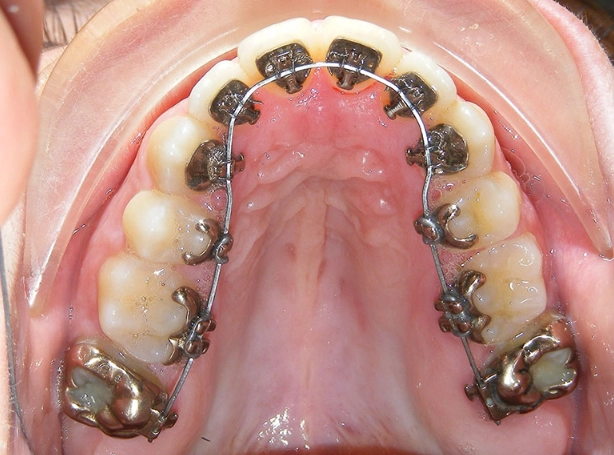
What You'll Discover
What Exactly Are Lingual Braces? (Beyond the Basics)
Most descriptions stop at "braces on the back of your teeth." That's like calling a sports car "a vehicle with four wheels." The magic—and the complexity—is in the customization. Unlike standard lab-made brackets, premium lingual systems like Incognito or WIN use digital scans of your teeth to design each bracket individually. The wire channel in each bracket is pre-programmed for your specific tooth movement. This isn't off-the-shelf; it's bespoke orthodontics.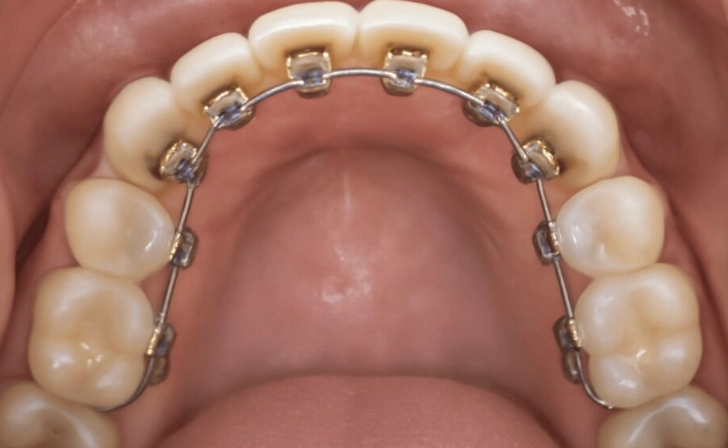
How do they stack up against other options? Let's break it down.
| Feature | Traditional Braces | Clear Aligners (e.g., Invisalign) | Lingual Braces |
|---|---|---|---|
| Visibility | Highly visible metal/ceramic brackets. | Nearly invisible when worn. | Completely invisible from the front. |
| Removability | Fixed, non-removable. | Fully removable for eating/cleaning. | Fixed, non-removable. |
| Comfort & Adaptation | Cheek/lip irritation common. Moderate speech impact initially. | Minimal irritation. Minor lisp possible. | Tongue irritation significant. Speech adaptation (lisp) is the biggest hurdle. |
| Treatment Control | High. Orthodontist has full control each visit. | Depends on patient compliance. Less precise for complex cases. | Very high. Offers control similar to traditional braces. |
| Ideal For | All cases, especially complex ones. Cost-effective. | Mild to moderate cases. Disciplined patients. | Adults with moderate complexity seeking maximum aesthetics. Not ideal for deep bites. |
The key takeaway? Lingual braces give you the powerful, controlled mechanics of traditional braces without the aesthetic compromise. But you trade the removability of aligners for a unique set of challenges inside your mouth.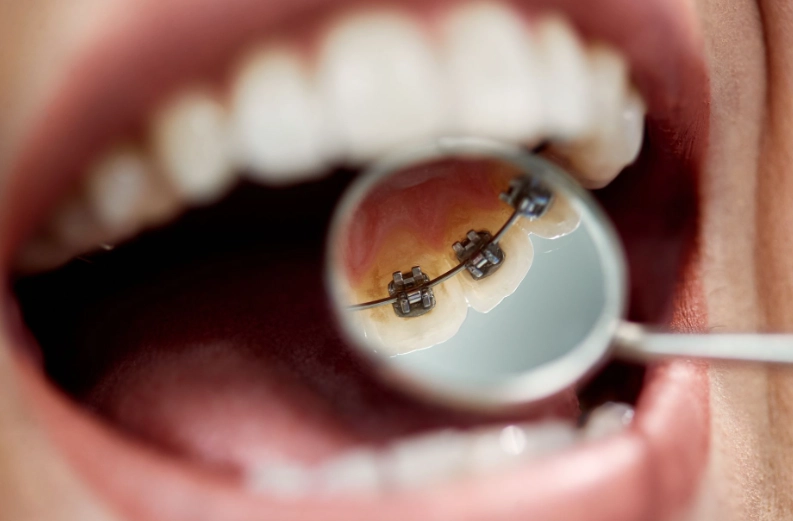
The Lingual Braces Process: A Step-by-Step Timeline
Getting lingual braces isn't a quick in-and-out affair. It's a committed partnership with your orthodontist. Here’s what the journey typically looks like, from consultation to retention.
1. The Deep-Dive Consultation
This is the most critical step. A good orthodontist won't just sell you on lingual; they'll assess if it's truly your best option. They'll take panoramic X-rays, photographs, and a highly precise digital scan (not just goopy impressions anymore) of your teeth. This scan is sent to a lab to design your custom brackets. Ask how many lingual cases they've completed. You want someone with hundreds, not a handful.
2. The Fitting Appointment
This takes longer than fitting traditional braces—often two to three hours. Each custom bracket is meticulously bonded to the back of each tooth. It's a detailed process. You'll leave with a mouth that feels very, very different.
3. The Adaptation Phase (Weeks 1-4)
This is the make-or-break period everyone underestimates.
Your tongue will feel invaded. It will rub against the brackets and wires, potentially causing sore spots. Orthodontic wax is your best friend. Use it liberally on any sharp edges.
Your speech will be affected. You will have a lisp. It's unavoidable. The tongue's pathway for making "s" and "t" sounds is blocked. The severity varies. The fix? Talk. Read aloud. Sing in the car. Your tongue is a muscle, and it will learn the new topography of your mouth. Most people adapt significantly within 2-3 weeks, but full normalization can take a couple of months.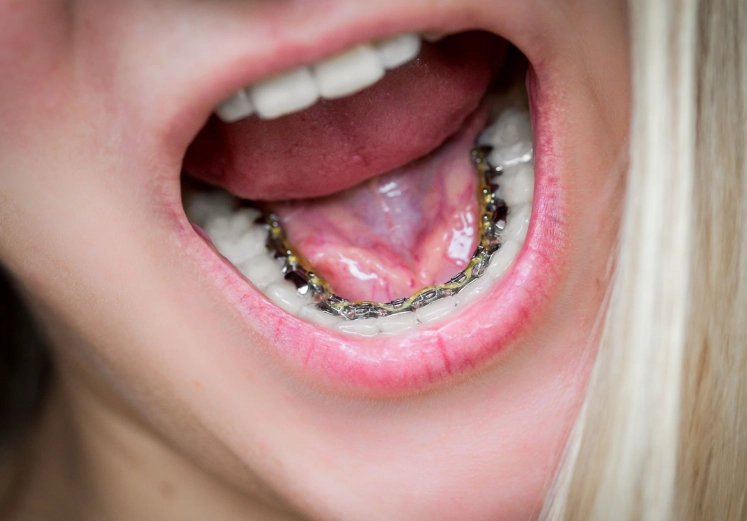
Eating is a chore. Stick to soft foods. Pasta, soup, mashed potatoes. You'll need to relearn how to chew without banging your brackets together.
4. The Adjustment Period (Monthly Visits)
Just like traditional braces, you'll have adjustments every 4-8 weeks where the wire is changed or tightened. These appointments are usually quicker. Discomfort after an adjustment is normal but typically less severe than the initial fitting.
5. The Finish Line & Retention
Once your teeth are perfectly aligned, the braces come off! But the work isn't done. You'll be fitted for retainers. For lingual cases, a common recommendation is a fixed, permanent retainer wire bonded to the back of your front teeth—keeping the results invisible—paired with a removable retainer for night wear. Retention is for life, regardless of the braces type.
Are You a Good Candidate for Lingual Braces?
Lingual braces aren't a one-size-fits-all solution. They excel in some scenarios and are a poor fit in others.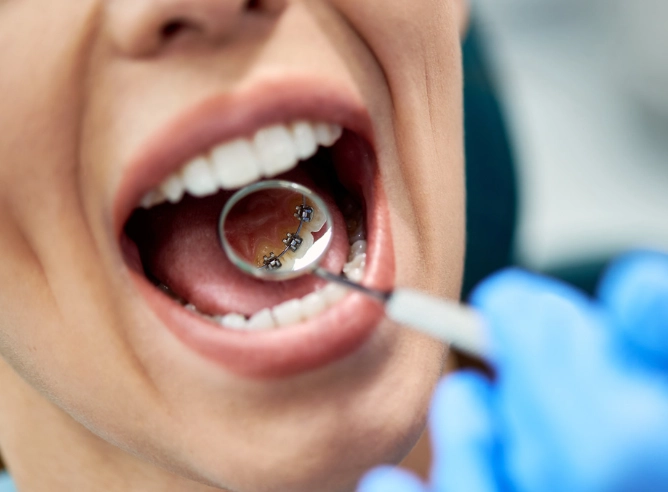
You might be an excellent candidate if:
• You're an adult or mature teen prioritizing aesthetics above all else (e.g., model, public speaker, executive).
• You have moderate crowding or spacing issues.
• You have a normal or open bite (where upper and lower front teeth don't overlap much).
• You struggled with compliance in the past and know you wouldn't wear removable aligners for 22 hours a day.
• Your enamel is strong and healthy.
You might want to reconsider if:
• You have an extremely deep bite (where upper teeth severely overlap the lowers). The lower brackets can constantly hit the back of the upper teeth, causing damage or popping off.
• You have very short teeth. There may not be enough surface area on the back for a bracket to adhere properly.
• You have poor oral hygiene habits. Cleaning around lingual brackets is notoriously difficult. If you're not diligent, you risk permanent white spots (decalcification) and gum inflammation.
• Your profession requires crystal-clear, unimpeded speech immediately (e.g., radio host, call center agent). The adaptation period could be professionally challenging.
• You have active gum (periodontal) disease. This must be stabilized before any orthodontic treatment.
I've seen patients who were dead-set on lingual braces for the invisibility but had a deep bite that made them a terrible candidate. A good orthodontist should steer them towards a better option, like clear aligners with bite ramps or even traditional braces for a shorter period.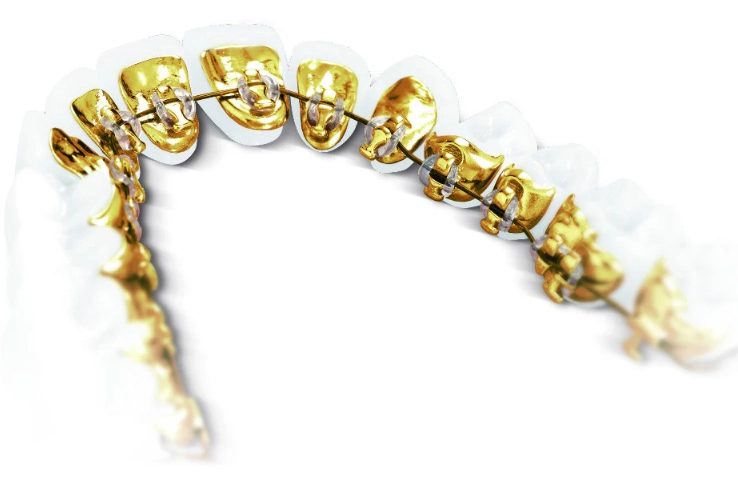
The Real Pros and Cons: An Unvarnished Look
Let's move past the marketing and get real about life with lingual braces.
The Powerful Advantages:
True Invisibility. This is the #1 reason people choose them. From a normal social distance, no one knows you're in treatment. For many adults, the psychological benefit is immense.
Effective for Complex Cases. They can handle movements that are sometimes beyond the scope of clear aligners, like large rotations or extrusions, because the force is applied directly and constantly.
No Compliance Issues. They're on 24/7. You can't forget to wear them, which is a common pitfall with aligners.
Protection for Front Teeth. If you play contact sports, the brackets on the back can offer some protection for your front teeth from impacts (still wear a mouthguard!).
The Honest Challenges:
Speech Disruption. It's the elephant in the room. The lisp is real and can be embarrassing initially. It gets better, but it requires active effort to overcome.
Tongue Discomfort. Your tongue will get sore, especially in the first month. It's a foreign object in a sensitive area.
Difficult Oral Hygiene. Cleaning is tough. You can't see what you're brushing. You'll need specialized tools: a small mirror, interdental brushes, a water flosser is almost non-negotiable, and possibly a single-tufted brush to get under the wire.
Higher Cost. The custom fabrication and technical expertise command a premium.
Limited Provider Pool. Not all orthodontists offer them. You need to find a certified, experienced practitioner.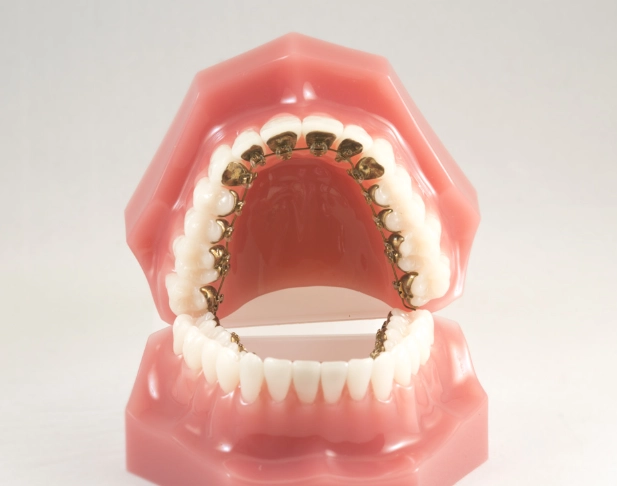
Lingual Braces Cost: A Realistic Breakdown
Let's talk numbers. Lingual braces are a premium product. In the United States, you can expect the total treatment cost to range from $8,000 to $13,000. In some major metropolitan areas or for highly complex cases, it can creep higher.
Why so much more than traditional braces (which often run $3,000-$7,000)?
• Custom Fabrication: Each bracket is milled or printed just for you.
• Specialist Training: The orthodontist pays for advanced courses and certification.
• Longer Appointment Times: The bonding and adjustment appointments often take more time and precision.
Most orthodontic offices offer payment plans, making the cost manageable over the treatment period (often 18-36 months). Dental insurance that covers orthodontics for adults is rare, but if you have it, it typically pays a lifetime maximum (e.g., $1,500-$2,000) regardless of the type of braces. Always check with your provider and the orthodontist's financial coordinator.
Expert Answers to Your Top Questions
How long does it take to talk normally with lingual braces?
Can lingual braces fix an overbite or underbite as well as traditional braces?
What's the biggest mistake people make when cleaning lingual braces?
Are lingual braces more painful than regular braces?
If I start with lingual braces and can't handle the tongue irritation, can I switch to another type of treatment mid-way?