Let's be honest. You want a whiter smile, but the thought of sharp sensitivity or damaging your enamel stops you cold. You've heard the horror stories. The internet is full of myths and misinformation about the safest teeth whitening techniques. After years in practice, I can tell you that safe whitening isn't about finding a magic product with zero risk. It's about understanding the science, choosing the right method for your specific teeth, and managing expectations. The safest path is the one that balances effectiveness with the long-term health of your smile.
Your Quick Guide to Safe Whitening
What Makes a Teeth Whitening Method “Safe”?
Safety in teeth whitening hinges on four pillars: the active ingredient, its concentration, the application method, and the exposure time. Get any of these wrong, and you're flirting with trouble.
The gold-standard active ingredients are hydrogen peroxide and carbamide peroxide. Carbamide peroxide breaks down into hydrogen peroxide and urea, often releasing the peroxide more slowly, which some find gentler. Anything else—charcoal, fruit acids, mysterious “blue light” kits without peroxide—lacks robust clinical evidence for significant, safe whitening. The American Dental Association (ADA) only awards its Seal of Acceptance to peroxide-based whitening products.
Concentration is critical. Over-the-counter products in the US are limited to 10% carbamide peroxide (roughly equivalent to 3.5% hydrogen peroxide). Professional products used by dentists range from 10% to 40% carbamide peroxide. The higher the concentration, the greater the potential for sensitivity and soft tissue irritation (those chemical burns on your gums).
But here's the nuance most miss: a lower concentration applied for a longer time in a well-fitted tray can be just as effective as a high-concentration blast with far less discomfort. It's the total dose that matters.
Professional vs. At-Home: A Safety and Effectiveness Breakdown
Let's cut through the marketing. Is a professional treatment inherently safer than doing it yourself? Not always, but it is almost always more controlled and predictable. The biggest safety factor a dentist provides is diagnosis. They check for cavities, gum disease, and exposed roots—all conditions that make whitening a bad idea until treated.
Here’s a straightforward comparison of your main options.
| Method | How It Works | Safety & Control Level | Realistic Outcome & Cost |
|---|---|---|---|
| In-Office Whitening | High-concentration gel (25-40% HP) applied by dentist, often with a light or laser. Gum protection is mandatory. | Highest. Complete professional control over gums, concentration, and time. Can include desensitizing treatments. | Fastest results (1-3 shades in an hour). Most expensive ($500-$1,000). Best for events or a quick start. |
| Dentist-Made Take-Home Trays | Custom-fitted trays and professional-grade gel (10-20% CP) for nightly use over 1-2 weeks. | Very High. Custom trays prevent gel leakage onto gums. Dentist prescribes the regimen. The gold standard for safe at-home whitening. | Excellent, even results. Gradual lightening minimizes sensitivity. Cost: $300-$600. |
| Over-the-Counter Whitening Strips | Thin plastic strips with a pre-applied, low-concentration gel. Worn for 30 min twice a day. | Moderate. One-size-fits-all strips can let gel ooze onto gums. User error is common (wearing too long). | Moderate lightening (2-4 shades). Can be uneven if strips don't fit well. Affordable ($20-$50). |
| Whitening Toothpastes & Rinses | Mild abrasives and low-dose chemicals (like hydrogen peroxide) for surface stain removal. | High. Very low risk. Main risk is abrasion from over-brushing with gritty pastes. | Minor brightening (0.5-1 shade). Maintains results but won't dramatically whiten. Inexpensive. |
The Truth About “Instant” and Natural Methods
I see patients who've tried baking soda, lemon juice, or activated charcoal. Let me be direct: these are among the least safe methods. Baking soda is abrasive and can scratch enamel over time. Lemon juice is highly acidic and literally dissolves your enamel—the opposite of what you want. Charcoal is also abrasive and can get stuck in gum pockets.
They might remove some surface stain, giving a fleeting sense of whiteness, but the long-term damage isn't worth it. Stick to the science.
How to Choose the Safest Option for You
Your dental history is your personal roadmap. Ask yourself these questions:
Do you have sensitive teeth? If yes, starting with a professional consultation is non-negotiable. You might benefit from a prescription-strength fluoride toothpaste for a few weeks before whitening to “armor” your teeth. A low-and-slow take-home kit from your dentist is likely your safest bet.
Do you have crowns, veneers, or large fillings on your front teeth? This is a dealbreaker for DIY. Whitening gel only works on natural enamel. If you whiten, your natural teeth will lighten, but your restorations will stay the same color, creating a mismatched smile. A dentist can plan a combined approach.
What's your budget and timeline? If you need whiter teeth for a wedding in two weeks, in-office is your safest fast option. If you have months and want minimal sensitivity, a dentist-supervised take-home kit is superior to guessing with strips.
Here’s a simple decision guide based on common scenarios:
- “My teeth are generally healthy, no sensitivity, and I want an affordable upgrade.” Try a reputable brand of whitening strips (look for the ADA Seal). Follow the timing instructions to the minute. Don't double up.
- “I have some sensitivity, and I want guaranteed even results without gum irritation.” Invest in a dentist-made take-home tray system. It's the single most effective way to control where the gel goes.
- “I have no idea about the condition of my teeth or gums.” Schedule a cleaning and check-up first. Whitening over cavities or inflamed gums is asking for severe pain.
Common Mistakes That Compromise Safety
People think more is better. It's not.
Overusing Whitening Toothpaste: These pastes often contain mild abrasives to polish off stains. Using them 3 times a day is like sanding your teeth down. Twice a day is plenty, or alternate with a non-whitening paste.
Ignoring Gum Health: If your gums are already receding, the roots of your teeth are exposed. This dentin is much more porous and stains easily but also whitens unpredictably and is extremely sensitive. Whitening can exacerbate the problem.
Following “Hack” Advice: Leaving strips on overnight? Mixing baking soda with peroxide? These internet hacks bypass all safety controls and can lead to severe chemical burns on your gums and permanent tooth damage.
The most overlooked safety step? Reading the instructions. Seriously. Time limits exist for a reason.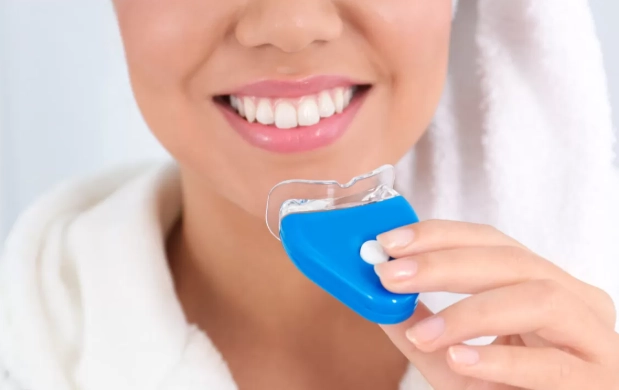
Your Top Safety Questions Answered
The bottom line is this: the safest teeth whitening is a mindful process, not a product. It starts with understanding your own mouth, respecting the chemicals involved, and often, getting a professional opinion. A bright smile shouldn't come at the cost of a healthy one. By prioritizing controlled, evidence-based methods, you can achieve a whiter smile confidently and safely.
Leave a Reply