Quick Navigation: Your Oral Health Guide
Let's be honest. Most of us have a nightly routine we follow on autopilot. You stumble into the bathroom, maybe squeeze out some toothpaste, and go through the motions. But have you ever paused, toothbrush in one hand and floss in the other, and genuinely wondered: wait, should I brush or floss first? It feels like one of those trivial questions, but then you think about it a bit more and realize you have no solid answer. Your dentist probably said "floss," but that memory is fuzzy. A blog you read once swore by brushing first. It's confusing.
I used to be firmly in the "brush first, always" camp. It just felt right. Start with the big cleaning job, then use the floss to get the tiny bits left over. Seemed logical. Then, during a routine check-up, my dentist asked about my routine. I proudly detailed my brushing technique. He nodded, then asked, "And when do you floss?" "After, of course," I said. He gave me a look that was a mix of pity and patience. That's when I learned I might have been doing it wrong for decades. This sent me down a rabbit hole of dental research, studies, and expert opinions to find the real answer to the should you brush or floss first dilemma.
The short answer, backed by a growing number of dental professionals and research, is that flossing before brushing is generally more beneficial. But the long answer? That's where it gets interesting, because it's not just about order—it's about understanding why that order works and how it changes the game for your oral health.
The Core Idea: Think of flossing not as "extra credit" but as the essential prep work. Flossing first loosens plaque and food debris from between your teeth and under the gumline. When you brush second, your toothbrush and fluoride toothpaste can then clean those freshly disrupted particles away and coat all tooth surfaces, including the now-accessible interdental spaces, with protective fluoride.
Why the "Brush or Floss First" Debate Even Exists
It's not like there's a global conspiracy to keep us confused. The debate stems from two different perspectives on the primary goal of oral hygiene.
One camp focuses on mechanical removal. Their logic: brushing is the heavy lifter that removes the bulk of plaque. Flossing afterwards is a fine-tuning step to catch what the brush missed. This view prioritizes the sweeping action of the brush.
The other camp, which is gaining more scientific traction, focuses on chemical protection. Their logic: flossing first breaks up the bacterial biofilm between teeth. Brushing second with a fluoride toothpaste then delivers that fluoride into the nooks and crannies opened up by flossing, allowing it to remineralize enamel more effectively. This view prioritizes the medicinal effect of toothpaste.
For years, the official stance from many dental associations was simply, "As long as you do both thoroughly, the order isn't critical." That's not wrong, but it's a bit of a cop-out. Newer research is suggesting that order can indeed optimize outcomes. The American Dental Association (ADA), while still emphasizing consistency over sequence, notes in its oral health resources that interdental cleaning is a crucial part of care. When you look at the mechanism, the sequence starts to make a lot of sense.
The Science Behind the Recommended Order: Floss First, Then Brush
Let's break down the process. Plaque is a sticky, organized biofilm of bacteria. It's not just loose food; it's a structured community clinging to your teeth.
When you floss first, you're doing a few key things:
- Disrupting the Fortress: You break up the biofilm between teeth, dislodging bacteria and particles.
- Creating Space: You physically create a wider gap (even if microscopic) between teeth by removing the gunk.
- Stimulating Gums: You cause a slight, healthy increase in blood flow to the gum tissue.
Now, follow that immediately with brushing. Your toothbrush bristles and, more importantly, the fluoride in your toothpaste, can now reach further. The fluoride can penetrate into the areas you just cleaned with floss, strengthening enamel there. The abrasive action of brushing can also sweep away the debris you just loosened, rather than pushing some of it back into the tight spaces.
A study published in the Journal of Periodontology compared the two sequences. Researchers found that the group that flossed before brushing retained significantly more fluoride in their mouth (the "fluoride reservoir") than the group that brushed first. More available fluoride means better protection against cavities. It's a compelling data point.
Here's a personal gripe with the "brush first" method: I always felt like I was just moving stuff around. I'd brush, then floss, and see gunk on the floss and think, "Great, got it." But that gunk was now in my mouth, and I'd just rinse it away. With flossing first, that dislodged material gets actively removed by the brushing that follows. It feels like a more complete clean.
What About the Other Way? The Case for Brushing First
It's only fair to present the other side. Some folks and even some dentists still prefer brushing first. Their reasoning usually hinges on habit and perception.
Brushing first covers large areas with fluoride toothpaste, which may help lubricate and slightly loosen plaque, making subsequent flossing easier for some people. If you use a toothpaste with strong whitening agents or desensitizing ingredients, you might want those agents on your teeth for the maximum contact time.
Also, let's be practical: if brushing first is the only way you'll actually floss, then for heaven's sake, stick with that. Consistency trumps optimal sequence. A flawed routine you actually do is infinitely better than a perfect routine you skip. The National Institute of Dental and Craniofacial Research stresses the importance of disrupting plaque daily, regardless of method order.
But if you're looking for the method that science suggests delivers a slight edge in plaque reduction and fluoride retention, the scales tip toward flossing first.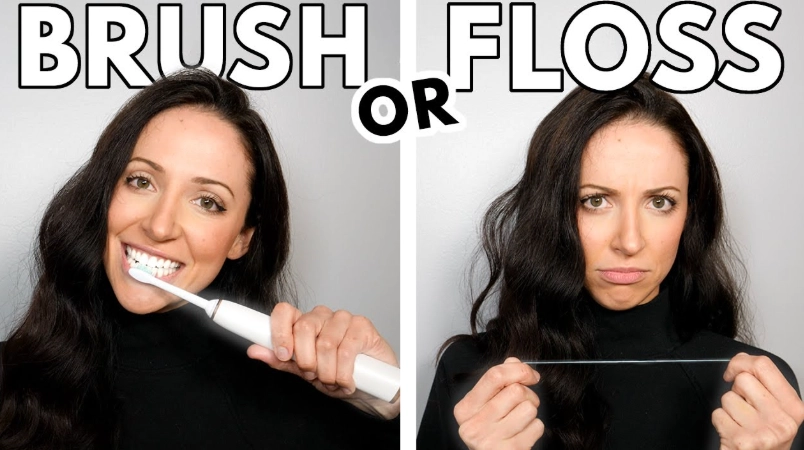
The Practical Guide: How to Properly Floss First, Then Brush
Your Step-by-Step, Optimized Routine
- Start with Floss: Take about 18 inches of floss. Wrap most around one middle finger, the rest around the other. Use a fresh segment for each tooth. Gently guide it between teeth, curving it into a C-shape against one tooth, then the other. Slide up and down, going slightly under the gumline. Don't snap it.
- Consider an Interdental Brush: If you have larger gaps, bridges, or braces, a tiny interdental brush might be more effective than floss. The principle is the same: use it before brushing.
- Now, Brush: Use a soft-bristled brush and fluoride toothpaste. Angle the bristles 45 degrees toward the gumline. Use short, gentle strokes on all surfaces—outer, inner, and chewing. Brush for a full two minutes. Don't forget your tongue.
- The Rinse Debate: Here's a controversial one. After brushing, spit out the excess toothpaste. But consider not rinsing with a huge mouthful of water. A quick swish is fine, but leaving a tiny film of fluoride on your teeth overnight can enhance its protective effect. Ask your dentist what they recommend for you.
It sounds simple, but this flip in sequence requires breaking a lifelong habit. Give it two weeks. See if your mouth doesn't feel noticeably cleaner in the morning.
Comparing the Outcomes: A Quick Look
This table sums up the key differences in focus and outcome between the two sequences. It's not about one being "wrong," but about which goals you prioritize.
| Factor | Floss First, Then Brush | Brush First, Then Floss |
|---|---|---|
| Primary Focus | Maximizing fluoride delivery & interdental cleaning. | Gross plaque removal followed by fine-tuning. |
| Fluoride Retention | Higher. Fluoride can reach between teeth. | Lower. Flossing after may remove some fluoride film. |
| Plaque Removal Efficiency | Potentially higher for interdental plaque. | Effective, but may leave loosened debris. |
| Feeling of Cleanliness | Often described as "more complete." | The traditional, familiar feeling. |
| Best for... | Those prone to interdental cavities, seeking optimal protection. | Those with an established routine they won't change. |
See? It’s not black and white. But the evidence for the benefits of flossing first is pretty convincing.
Answering Your Burning Questions
Yes, indirectly but importantly. Gum disease (gingivitis) starts with plaque buildup at and below the gumline. Flossing first is more effective at disrupting that sub-gingival plaque. When you brush second, you help clear it away. This one-two punch is better at keeping the gumline healthy than brushing alone or doing things in reverse.
Absolutely, and it's even trickier. With braces, plaque traps are everywhere. The general recommendation is to use interdental brushes or a water flosser to clean around brackets and wires first, then brush meticulously. The "clean the traps, then sweep everything away" logic is amplified with orthodontics.
The same principle applies! Use the water flosser first to blast away debris and disrupt plaque from between teeth and under gums. Follow with brushing to apply fluoride and polish all surfaces. A 2021 ADA article confirms water flossers can be an effective alternative to string floss for reducing gingivitis. So, water floss first, then brush.
No, bleeding gums usually indicate inflammation caused by existing plaque and bacteria. It's a sign you need to floss more gently but more consistently, not avoid it or change the order. Gentle, daily flossing (whether first or second) should reduce bleeding within a week or two. If it persists, see your dentist.
Nighttime is non-negotiable. While morning cleaning is great, the nighttime session is critical because saliva flow decreases during sleep, reducing its natural cleaning and neutralizing effect. Going to bed with a clean, fluoride-coated mouth is your best defense. So, tackle the should u brush or floss first question as part of your unwavering bedtime ritual.
Common Mistakes to Avoid (No Matter the Order)
While we're obsessed with sequence, let's not forget technique. Doing both badly in the perfect order is still bad.
- Sawing vs. Hugging: Don't just saw the floss back and forth. Curve it around each tooth.
- Brushing Too Hard: You're not scrubbing a tile grout. Gentle pressure is enough. Hard brushing damages gums and enamel.
- Skipping Surfaces: The inner surfaces of your teeth and your tongue harbor bacteria too.
- Rushing: Two minutes of brushing. Take your time with floss. This isn't a race.
Look, at the end of the day, the most important thing is that you're doing both, daily. The question of should you brush or floss first is about optimizing an already good habit. If you've been brushing first your whole life, don't panic. You're still lightyears ahead of someone who does neither.
But if you're looking for that extra edge, for the method that aligns with current scientific understanding of how fluoride works and how plaque behaves, then the answer is clear. Try it. Grab your floss tonight, do that first, then brush. See how it feels. Your teeth—and maybe even your dentist—might thank you.
It's a small change with potentially big rewards. And in the world of health, those are the best kind of changes.