Quick Guide
- What's Going On in Your Mouth While You Sleep?
- How Can a Piece of Plastic Fix These Problems?
- The Big Divide: Custom vs. Over-the-Counter Mouth Guards
- Choosing the Right Mouth Guard for Your Situation
- The Step-by-Step Process of Getting a Custom Appliance
- Living With Your Mouth Guard: Care and Realistic Expectations
- Answers to Questions You're Probably Asking
Let's talk about something that happens when the lights go out. You might be doing it right now and not even know it. I'm talking about grinding your teeth, or that feeling of gasping for air in the middle of the night. It's more common than you think, and it can really wreck your day before it even starts.
The good news? A simple device you wear in your mouth at night might be the game-changer you need. We're diving deep into the world of mouth guards for teeth grinding and sleep apnea. Not all mouth guards are created equal, and figuring out which one is right for you can feel overwhelming. That's why I put this guide together.
I've spent a lot of time researching this, talking to people who've used them, and sifting through the medical info. Some products are fantastic, others... not so much. I'll give you my honest take.
What's Going On in Your Mouth While You Sleep?
First, let's untangle the two main issues we're dealing with. They're different, but they often show up to the same party.
Bruxism (That's the Fancy Word for Teeth Grinding)
You clench your jaw. You grind your molars together. Sometimes it's loud enough to wake up your partner. The force you exert is incredible – way more than you use for chewing. The result? Worn-down teeth, headaches that feel like a vise around your skull in the morning, sore jaw muscles, and even cracked fillings or teeth. It's often linked to stress or anxiety, but sometimes your bite is just off.
It's a real physical problem with tangible consequences.
Obstructive Sleep Apnea (OSA)
This is more serious. Your airway collapses or gets blocked during sleep. Your breathing stops for 10 seconds or more, sometimes hundreds of times a night. Your brain has to briefly wake you up to restart breathing, which destroys your sleep cycle.
You might not remember these awakenings, but you feel the fallout: crushing daytime fatigue, loud snoring, morning dry mouth, and a foggy brain. Long-term, untreated sleep apnea is bad news for your heart and overall health.
How Can a Piece of Plastic Fix These Problems?
It seems almost too simple, right? But the mechanics make sense when you break them down.
For teeth grinding, the mouth guard acts as a physical barrier. It's a cushion. Your upper and lower teeth grind against the guard's material instead of against each other. This absorbs the destructive forces, protecting your enamel, reducing muscle strain in your jaw, and hopefully quieting down the noise. It doesn't always stop the clenching impulse, but it prevents the damage.
For sleep apnea, the mechanism is different. An oral appliance, which is the clinical term for a specific type of mouth guard designed for this, works by repositioning your lower jaw (mandible) and tongue slightly forward. This simple forward movement pulls the base of your tongue away from the back of your throat, preventing it from collapsing and blocking your airway.
Think of it like propping open a floppy hose.
It's not a cure for everyone with severe sleep apnea, but for mild to moderate cases, it can be incredibly effective and is often better tolerated than the traditional CPAP machine. The American Academy of Dental Sleep Medicine provides extensive resources on how these oral appliances function as a frontline treatment.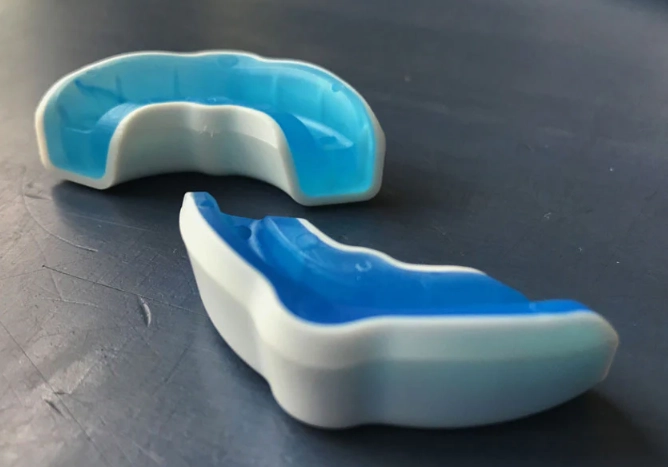
So, a single device can sometimes address both issues if it's designed correctly. But that's the key – the design.
The Big Divide: Custom vs. Over-the-Counter Mouth Guards
This is the most critical decision you'll make. Walk into any pharmacy, and you'll see shelves of boil-and-bite guards for under $50. Then your dentist talks about a custom-made one that costs hundreds. What's the real difference?
Let me be blunt: the over-the-counter ones are primarily for basic teeth grinding protection. They are not, and I repeat NOT, FDA-cleared or recommended for treating obstructive sleep apnea. Using a cheap guard for a serious medical condition like sleep apnea is a bad idea. It could even make things worse by pushing your jaw into a wrong position.
Here’s a breakdown that lays it all out:
| Feature | Custom-Fitted Dental Appliance | Over-the-Counter (OTC) Boil & Bite |
|---|---|---|
| Primary Purpose | Treating mild/moderate sleep apnea & severe bruxism | Temporary relief for minor teeth grinding |
| Fit & Comfort | Precise, made from dental impressions. Snug, minimal bulk. | Generic fit. Can be bulky, may trigger gag reflex. |
| Adjustability | Often adjustable in small increments by your dentist. | Fixed position after molding. |
| Durability | High-quality medical-grade materials. Lasts 3-5+ years. | Softer plastic. Wears out or tears in 6-12 months. |
| Safety & Efficacy for Apnea | FDA-cleared as a medical device. Effectiveness proven. | Not for sleep apnea. No clinical oversight. |
| Professional Oversight | Dentist monitors fit, jaw health, and treatment progress. | None. You're on your own. |
| Cost | Higher upfront cost ($1,500 - $3,000+). Often covered by medical insurance. | Very low ($20 - $100). Rarely covered by insurance. |
See the gap? It's massive. The custom route involves a team: a sleep physician who diagnoses you and a qualified dentist who makes and fits the appliance. The American Academy of Sleep Medicine has clear guidelines on this collaborative care model. You can't DIY a medical treatment.
I tried a boil-and-bite guard years ago for grinding. It was okay for a few months, but it felt like a hockey puck in my mouth. It made me drool, and it started to smell funky no matter how much I cleaned it. Eventually, it cracked. That experience pushed me to look into the professional option.
Choosing the Right Mouth Guard for Your Situation
Okay, so you're considering the professional path. Even within custom mouth guards, there are styles. Your dentist will recommend one based on your specific needs.
For Predominantly Teeth Grinding (Bruxism)
The goal is protection and stability. These are often called night guards or occlusal guards.
- Stabilization Splints: These are usually hard acrylic and cover all the teeth in one arch (usually the upper). They provide a flat, even surface to prevent wear. They're durable and great if you have a heavy grind.
- Soft Night Guards: Made of a softer, more flexible material. Some people find them more comfortable initially. However, they can be less durable for intense grinders and might encourage more chewing motion because they're soft.
Some dentists prefer a hard outer shell with a soft inner lining for a combo of durability and comfort.
For Sleep Apnea (Mandibular Advancement Devices - MADs)
These are the ones that move your jaw. They're the true mouth guard for teeth grinding and sleep apnea dual-threats when both issues are present.
- Fixed (Non-Adjustable) MADs: The jaw is set in one forward position. Simpler design, but less room for fine-tuning.
- Titratable (Adjustable) MADs: This is the gold standard. They have tiny screws or mechanisms that allow your dentist to gradually advance your jaw millimeter by millimeter over several visits. This lets you find the most effective and comfortable position with the least side effects. Brands like SomnoDent and Herbst are well-known in this category.
The adjustability is crucial.
Starting with too much advancement can cause significant jaw pain, making you abandon treatment. A slow, controlled titration under professional guidance is the way to go.
For a Mix of Both
Many modern MADs are designed with a flat biting surface. So, while they're holding your jaw forward to keep your airway open, they're also preventing your teeth from grinding against each other. It's a two-for-one design. When discussing options with your dentist, explicitly ask if the appliance they're recommending will also protect against grinding forces.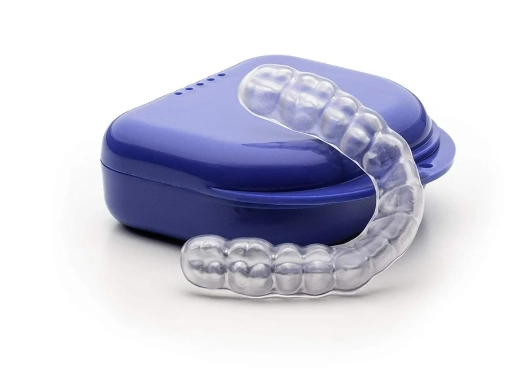
The Step-by-Step Process of Getting a Custom Appliance
If you're curious about what you're signing up for, here's the typical journey. It's not an overnight thing.
- Sleep Study First: You can't treat what you haven't diagnosed. A sleep study (either in-lab or a home test) is essential to confirm sleep apnea and gauge its severity. Your primary doctor or a sleep specialist orders this.
- Consultation with a Qualified Dentist: Not every dentist does this. Look for one with expertise in dental sleep medicine. They'll examine your mouth, jaw, teeth, and airways. They'll review your sleep study results. This is where you discuss your symptoms, both apnea and grinding.
- Impressions and Records: If you're a candidate, they'll take highly detailed molds (impressions) of your teeth. They might also take scans, X-rays, or record your bite relationship.
- Appliance Fabrication & Fitting: The lab makes your custom mouth guard. At the next appointment, your dentist fits it, shows you how to insert/remove it, and sets it to your starting position (if adjustable).
- The Titration Phase (for MADs): Over the next several weeks/months, you'll have follow-ups. You report how you're sleeping and feeling. Your dentist makes tiny adjustments to advance the jaw further, aiming for optimal apnea reduction with maximum comfort.
- Follow-up Sleep Study: Often, once you're at the final comfortable position, your doctor will order a follow-up sleep test while wearing the appliance. This is the only way to objectively prove it's working to reduce your apnea events. The goal is usually to get your AHI (Apnea-Hypopnea Index) below 5, which is considered normal.
- Long-Term Maintenance: You see your dentist every 6-12 months for a check on the device, your teeth, and your bite.
It's a commitment. But for many, it's a life-changing one that feels far more natural than being hooked up to a CPAP machine every night.
Living With Your Mouth Guard: Care and Realistic Expectations
You've got the device. Now what? Making it part of your routine is key.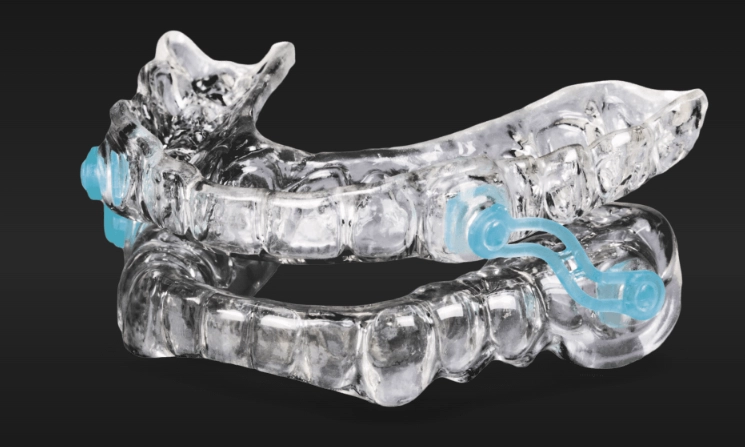
Cleaning is non-negotiable. Every morning, brush it gently with a soft toothbrush and cool water. You can use a bit of mild soap or the cleaning tablets made for retainers. Never use hot water, as it can warp the plastic. I made that mistake once with an old retainer – it was never the same.
Store it in its ventilated case when not in use. Don't wrap it in a napkin on your nightstand – you'll throw it away. Trust me.
Managing expectations: The first week will feel weird. You'll be hyper-aware of it. Give it at least two weeks of consistent use before you judge. The goal for sleep apnea is not necessarily "perfect sleep" overnight, but a reduction in snoring, fewer nighttime trips to the bathroom, and a clearer head in the morning. For grinding, the goal is the absence of jaw pain and headache when you wake up.
It's a tool, not a cure. If your apnea is severe, a mouth guard might not be enough, and CPAP could still be the best option. The National Heart, Lung, and Blood Institute has good patient resources comparing all sleep apnea treatment options.
The right mouth guard for teeth grinding and sleep apnea should feel like a helpful tool, not a nightly punishment. If it causes significant pain that doesn't fade, something is wrong. Talk to your dentist.
Answers to Questions You're Probably Asking
Let's tackle some common head-scratchers.
Will my insurance cover a mouth guard for teeth grinding and sleep apnea?
It's a mixed bag. For a basic night guard for grinding, it's often considered a dental procedure, so your dental insurance might cover a portion (usually 50%, with an annual maximum). For an oral appliance for diagnosed sleep apnea, it's considered a medical treatment. Your medical insurance (not dental) should cover a significant part of it, similar to how they'd cover a CPAP machine. The key is a proper sleep study diagnosis and a letter of medical necessity from your doctor. Be prepared to navigate some paperwork.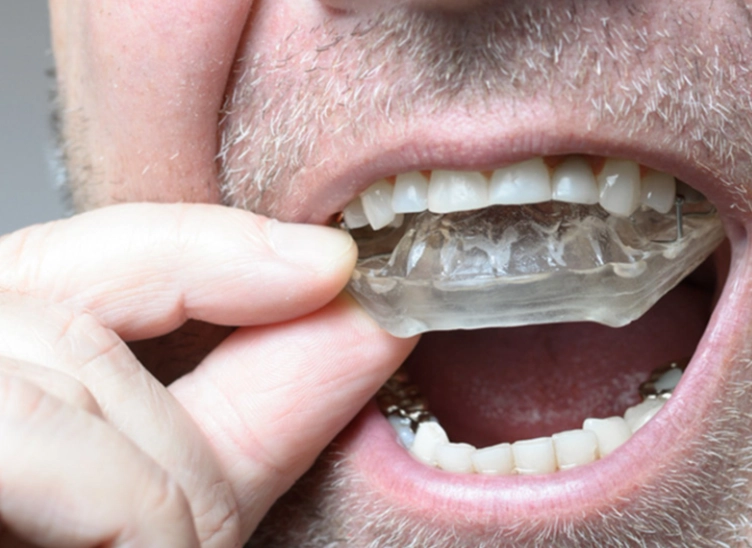
Can I use a sports mouth guard instead?
No. Absolutely not. Sports guards are designed to protect against impact trauma to the teeth and jaws. They are bulky, not designed for all-night wear, and do nothing to position the jaw forward for airway management. It's like using a baseball mitt to catch a golf ball – wrong tool for the job.
How do I know if I need one for grinding or for apnea?
The symptoms can be your clue. Grinding: Focus on jaw/face pain, headaches, tooth sensitivity, flattened or chipped teeth. Apnea: Focus on snoring, witnessed breathing pauses, daytime exhaustion, waking up gasping. If you have a mix of both, you likely need the dual-action device. But a sleep study is the only way to definitively rule apnea in or out. Don't guess with your health.
Are there people who shouldn't use one?
Yes. If you have very few teeth, severe gum disease, or certain problems with your jaw joint (TMJ disorders like severe clicking, popping, or locking), a mandibular advancement device might not be suitable. Your dentist needs a solid foundation of healthy teeth and gums to anchor the appliance. A thorough dental exam is the first filter.
Look, the journey to find the right mouth guard for teeth grinding and sleep apnea is personal. It requires patience, professional guidance, and a bit of trial and error. But when you find the one that fits and works, the payoff is a quieter, more restful night and a body that isn't fighting itself until sunrise. That's worth the effort.
Start with a conversation with your doctor about your sleep, then find a dentist who listens. Your future well-rested self will thank you.
Leave a Reply