In This Guide
Let's be real. You sat through the drill, got the filling, and figured the hard part was over. Then, a week later, your jaw starts talking to you. Not with a sharp, immediate toothache, but with a deeper, duller ache that seems to settle in the joint, maybe even spreading to your ear or temple. It's confusing, and honestly, a bit worrying. Is this normal? Did something go wrong? Should you just tough it out or call the dentist?
I've been there myself. A few years back, I had a deep filling on a lower molar. The tooth felt fine, but my jaw... it felt like I'd been chewing on a bag of rocks for hours. It took me by surprise because the pain wasn't in the tooth at all. Turns out, jaw pain 1 week after filling is a story I've heard from friends, family, and in countless online forums. It's more common than you might think, but that doesn't make it any less annoying to deal with.
So, let's break it down. Why does this happen, what can you do about it, and when is it a red flag? We'll move past the generic "it might be sore" advice and get into the specifics.
Why Your Jaw Might Be Complaining a Week Later
First off, immediate pain right after the anesthetic wears off is one thing. But pain that shows up or sticks around a week post-filling points to different mechanisms. It's rarely an infection at this stage (that usually takes a bit longer to brew), and it's often not about the filling itself being "bad." The culprit is usually related to the mechanics of your jaw joint, your bite, or referred pain. Here’s a look at the usual suspects, from most to least common.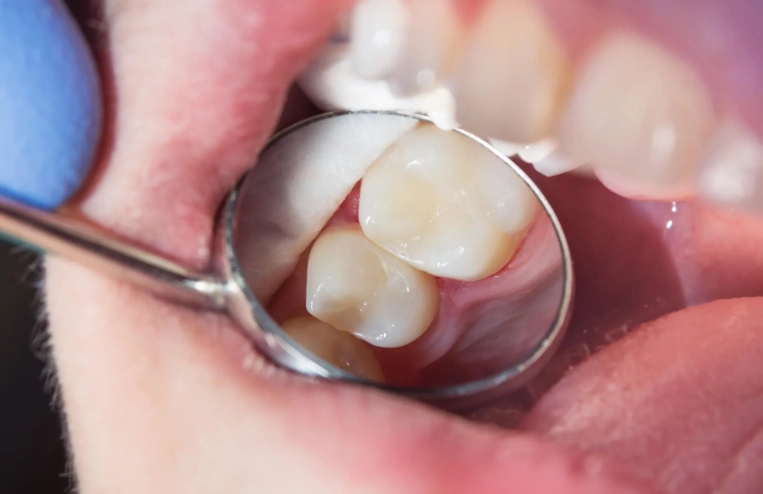
The Big One: TMJ and Muscle Strain
This is, hands down, the most frequent reason for jaw pain one week after a dental filling. Your temporomandibular joint (TMJ) and the muscles that control it (the masseters, temporalis, etc.) are incredibly sensitive to prolonged strain.
Think about what happens during a filling. Your mouth is wide open, often at an uncomfortable angle, for 30 minutes to an hour or more. You're trying to stay still. There's pressure, vibration, and noise. It's a workout for muscles that aren't used to being held in that position for so long. It's like holding a plank for an hour—you're going to feel it later.
This strain can lead to myofascial pain—pain in the muscle and the connective tissue covering it. The ache can be in the joint itself (right in front of your ear), in the cheek, or even wrap around to the side of your head. It often feels worse in the morning or after chewing. The American Dental Association has a good primer on TMD (Temporomandibular Disorders) that explains this connection well.
Honestly, I think the waiting is the worst part. You keep thinking it should be gone by now, but muscle recovery isn't always linear.
The Sneaky Culprit: A Slightly "Off" Bite (High Filling)
This is a close second and often intertwined with muscle strain. When a dentist places a filling, especially on a back tooth, they have to shape it to match your bite perfectly. This is an art and a science. Sometimes, even a fraction of a millimeter of extra material on the filling can throw your bite off.
Your teeth are supposed to meet evenly. If one tooth hits first because the filling is a tad too high, it creates a premature contact. Every time you chew, clench, or even just rest your jaws together, that one tooth takes the brunt of the force. Your jaw muscles have to work overtime to compensate, trying to find a comfortable position that doesn't exist anymore. This constant, low-grade strain on the muscles and the ligament around the tooth can absolutely manifest as a diffuse jaw pain a week after the filling.
You might not even feel it on the tooth itself. Instead, your brain interprets the constant pressure and muscle fatigue as a general jaw ache. It's a classic case of referred pain.
Referred Pain: The Confusing Ache
Referred pain is when a problem in one area causes pain in another. A deep filling, even if done perfectly, can inflame the ligament that holds the tooth in its socket (the periodontal ligament). This inflammation can send pain signals that your brain misinterprets as coming from the jaw joint or the surrounding muscles.
Similarly, if you had a lot of work done or the cavity was deep and close to the nerve, the tooth itself might be in a state of heightened sensitivity or mild inflammation (reversible pulpitis). That discomfort can radiate, feeling like a broad jaw ache rather than a pinpoint toothache. This is a key reason why someone might search for jaw pain 1 week after filling instead of "tooth pain." The sensation isn't localized.
The Less Common (But Important) Reasons
While muscle and bite issues are the top causes, we can't ignore other possibilities. It's worth running through these to know when to be more concerned.
| Cause | What It Feels Like | Likelihood & Notes |
|---|---|---|
| TMJ Disorder Flare-Up | Pain directly in the joint, clicking/popping, limited mouth opening. You might have had minor issues before that the dental visit aggravated. | Moderate. The procedure can be a trigger for an underlying condition. |
| Bruxism (Clenching/Grinding) | Dull, constant ache, often worse in the morning. You might be subconsciously clenching more due to the new feeling in your mouth or stress from the procedure. | High. Very common response to dental work or stress. |
| Allergic Reaction | Unlikely with modern composites, but possible with older materials. Pain plus itching, rash, or unusual swelling in the area. | Very Rare. |
| Fractured Tooth | Sharp pain on biting, not usually a diffuse ache. Could happen if the tooth was already weakened. | Uncommon, but serious. |
| Abscess/Infection | Throbbing, severe, persistent pain, swelling, bad taste, fever. Pain that wakes you up. | Uncommon at the 1-week mark from a new filling, but possible if the decay was very deep. |
See? Most of it is mechanical, not pathological. That should offer some reassurance.
What You Can Do About It: A Two-Pronged Approach
Okay, so you've got this ache. Let's talk action. I always split this into things you can try at home and signs that mean you should pick up the phone.
At-Home Care and Self-Management
If the pain is manageable—more of a nagging annoyance than debilitating—try these for a few days. They're aimed at calming down muscle inflammation and giving your jaw a break.
- Soft Diet, Seriously: This isn't just casual advice. For a solid 3-5 days, eat like you're recovering from something. Soups, yogurts, mashed potatoes, smoothies. Avoid chewy bagels, tough meats, crunchy nuts, and gum. You're giving your jaw muscles a vacation.
- Heat is Your Friend: Apply a warm, moist washcloth or a heating pad (on low) to the sore side of your jaw for 15-20 minutes several times a day. Heat increases blood flow and relaxes tight muscles. This helped me more than anything else.
- Over-the-Counter Relief: An anti-inflammatory like ibuprofen (Advil) or naproxen (Aleve) can reduce both muscle and dental ligament inflammation. Always follow the label directions and check with your doctor if you have any conditions that prevent you from taking them. Acetaminophen (Tylenol) helps with pain but doesn't tackle inflammation as directly.
- Jaw Yoga (Gentle Stretching): Very gently open and close your mouth without forcing it. Try slow, controlled side-to-side movements. The goal is gentle mobilization, not stretching to the max. If it hurts, stop.
- Mind the Clenching: Become a detective of your own habits. Are you clenching your teeth during the day when you're stressed or focused? Is your tongue pressed against the roof of your mouth? Try to keep your lips together, teeth apart, and tongue relaxed. Place the tip of your tongue behind your front teeth as a neutral position.
When to Call Your Dentist (No Hesitation)
Home care is great, but it has its limits. Don't fall into the trap of thinking you're "bothering" your dentist. They need to know if something isn't right. Here are the non-negotiable signs to call:
- The pain is severe, throbbing, or keeps you up at night.
- You notice visible swelling in your cheek, jaw, or gums.
- You have a fever or a bad taste in your mouth that won't go away.
- The pain is sharply focused on one tooth when you bite down (a classic sign of a high filling or crack).
- Your bite feels obviously wrong—like one tooth is hitting first.
- The jaw pain 1 week after the filling isn't improving at all after 3-4 days of soft diet and rest, or it's getting worse.
What will the dentist do? For a bite issue, it's a quick fix. They'll have you bite on a piece of articulating paper, see the high spot, and polish down the filling in seconds. The relief can be instantaneous. For muscle/TMJ issues, they might recommend continuing with moist heat, soft diet, and possibly refer you to a specialist for persistent problems. The National Institute of Dental and Craniofacial Research (NIDCR) provides authoritative information on TMJ disorders and their management.
Questions You're Probably Asking (The FAQ Section)
For simple muscular strain or a minor bite adjustment, you should see significant improvement within 3-7 days of starting a soft diet and self-care. If it's purely from keeping your mouth open, it often resolves faster. If the pain is lingering beyond 10-14 days without any change, that's a clear signal to get it checked. Persistent jaw pain one week after dental filling that doesn't budge needs a professional eye.
Absolutely. Muscle pain is notorious for this. You might feel fine in the morning, then ache after a long meeting where you were clenching your teeth. Or it might feel okay until you try to eat something slightly chewy. This fluctuating pattern is more suggestive of a muscular/TMJ issue than a constant, throbbing tooth infection.
It's possible, but not the first assumption. A root canal is needed when the nerve inside the tooth is irreversibly damaged or infected. The hallmark signs are spontaneous pain (pain that comes out of nowhere), pain that lingers for minutes after a hot or cold stimulus, throbbing that disrupts sleep, and swelling. A diffuse jaw ache a week out is less typical of a root canal need right away. However, if the cavity was very deep, the pulp can become irritated and take time to declare its intentions. This is why follow-up is crucial.
Nighttime is when many people clench or grind (bruxism) without knowing it. Try taking an anti-inflammatory before bed (as directed). A warm shower before bed to relax your whole body, including your jaw, can help. Some people find a very gentle, over-the-counter night guard (a "boil-and-bite" type) can provide a protective barrier, but these can sometimes make bite issues worse, so use with caution and only as a very short-term measure. The best night guard is one custom-made by your dentist.
Yes, definitely. If you have a history of jaw clicking, clenching, grinding, or neck/shoulder tension, you're more likely to experience jaw pain after a dental filling. People with existing TMJ dysfunction are simply more vulnerable to having it flared up by a long dental appointment. It doesn't mean the dentist did anything wrong; it just means your jaw is a bit more sensitive to perturbation.
Looking at the Bigger Picture: Prevention and Long-Term Health
If you're prone to this, a little communication can go a long way for next time.
- Talk to Your Dentist Beforehand: At your next cleaning, mention that you had jaw pain after your last filling. A good dentist will note this. They can provide more frequent breaks during treatment for you to close your mouth, use a smaller bite block, or be extra meticulous about checking your bite.
- Consider a Night Guard: If you grind your teeth, a custom-made night guard from your dentist is an investment that protects your teeth and your jaw muscles from the cumulative effects of clenching. It's not just for tooth wear.
- Mind-Body Connection: Stress is a huge driver of jaw tension. Techniques for general stress reduction—exercise, meditation, breathing exercises—can indirectly but powerfully reduce the baseline tension in your jaw muscles. It sounds fluffy, but it works.
Ultimately, experiencing jaw pain 1 week after filling is usually a bump in the road, not a dead end. It's your body's way of saying the area got stressed. Most of the time, with some targeted TLC and possibly a quick bite adjustment, it settles down. But listen to the quality of the pain. Distinguish between the deep ache of a tired muscle and the urgent, pounding signal of something more serious.
Trust that feeling. When in doubt, a quick call to your dentist's office for advice is never a waste of time. It's their job to help you navigate this exact situation, and getting you comfortable is the whole point of the treatment in the first place.
Leave a Reply